Say Goodbye to Measurement Errors! How 2D Measurement Is Reshaping the Paradigm of Precision Design?
Two - dimensional measurement quantifies lengths and areas within flat planes, using tools like rulers and calipers. It's crucial for geometry, engineering, and design, focusing on x and y axes.
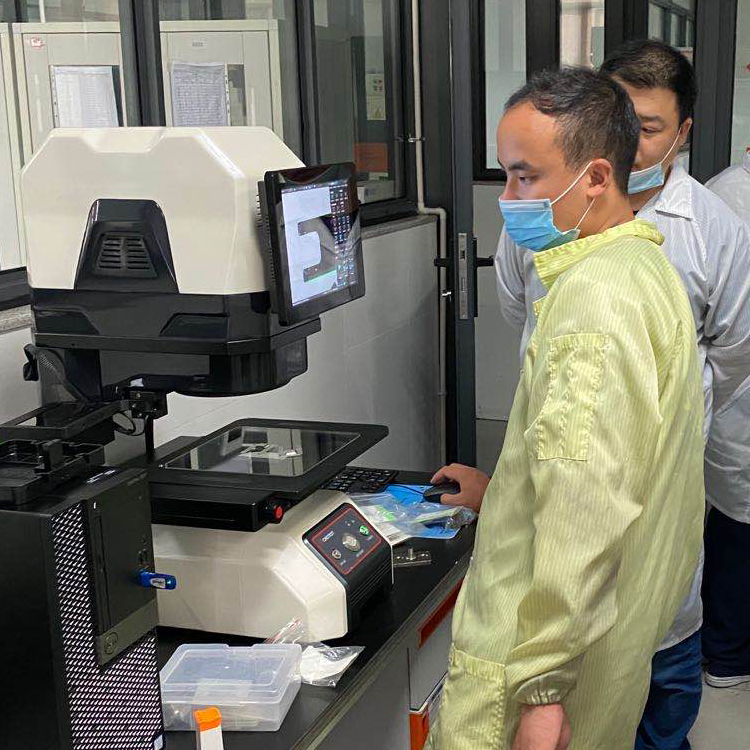
Table of Contents
1. Introduction: The Critical Role of Accuracy in Design
2. What Is Two-Dimensional Measurement?
- Verifying the dimensions of printed circuit boards (PCBs)
- Inspecting sheet metal parts for manufacturing defects
- Mapping floor plans in architectural design
- Analyzing 2D profiles in mechanical engineering
3. Common 2D Measurement Methods and Operation Guides
3.1 Ruler and Caliper Measurement
- Prepare Tools: Use a steel ruler (for basic length) or a vernier caliper (for higher precision, up to 0.02mm).
- Align the Tool: Place the ruler/caliper along the feature to measure, ensuring it is perpendicular to the reference edge.
- Read Data: Record the measurement at the point where the feature aligns with the tool's scale.
3.2 Coordinate Measurement (2D Cartesian System)
- Define a Reference System: Establish an origin point and X/Y axes on the object or drawing.
- Collect Data Points: Use a digitizing tablet, touch probe, or software to record coordinates (x, y) of key features.
- Calculate Dimensions: Use geometric formulas (e.g., distance between two points: √[(x2-x1)² + (y2-y1)²]) to derive lengths, angles, or areas.
3.3 Image-Based Measurement (Computer Vision)
- Capture Images: Use a high-resolution camera or scanner to digitize the object/surface.
- Calibrate the System: Apply calibration grids to convert pixel measurements to real-world units.
- Analyze with Software: Use tools like ImageJ or MATLAB to identify edges, measure distances, and validate dimensions automatically.
3.4 Laser Scanning for 2D Profiles
- Position the Scanner: Mount a laser line scanner perpendicular to the object's surface.
- Scan the Profile: Move the scanner or object to capture a 2D cross-sectional profile.
- Process Data: Use dedicated software to convert point clouds into measurable coordinates and geometric features.
4. Advantages and Disadvantages: 2D Measurement vs. Traditional Methods
|
Method
|
Advantages
|
Disadvantages
|
|
2D Digital Tools
|
High accuracy, digital data integration, automation
|
Initial investment in software/hardware
|
|
Manual Ruler/Caliper
|
Low cost, immediate results
|
Prone to human error, limited to simple shapes
|
|
3D Measurement (Indirect 2D Extraction)
|
Captures depth information
|
Overkill for planar tasks, slower data processing
|
5. How 2D Measurement Revolutionizes Precision Design
- CAD Integration: Digital 2D measurement tools export data directly into design software, eliminating manual transcription errors.
- Quality Control: Automated image-based systems can inspect thousands of parts per hour, flagging deviations from design specs in real time.
- Collaboration: Standardized 2D measurement reports ensure consistency across teams, suppliers, and manufacturing facilities.By focusing on the X-Y plane, designers and engineers can isolate critical planar dimensions, streamline workflows, and achieve tolerances as tight as ±0.01mm—impossible with traditional manual methods.
6. Industry FAQs About 2D Measurement
Q1: When should I use 2D measurement instead of 3D?
Q2: How do I choose the right 2D measurement method?
Q3: What causes measurement errors in 2D systems?
Q4: Do I need specialized training to use advanced 2D tools?
Q5: What’s the future of 2D measurement?
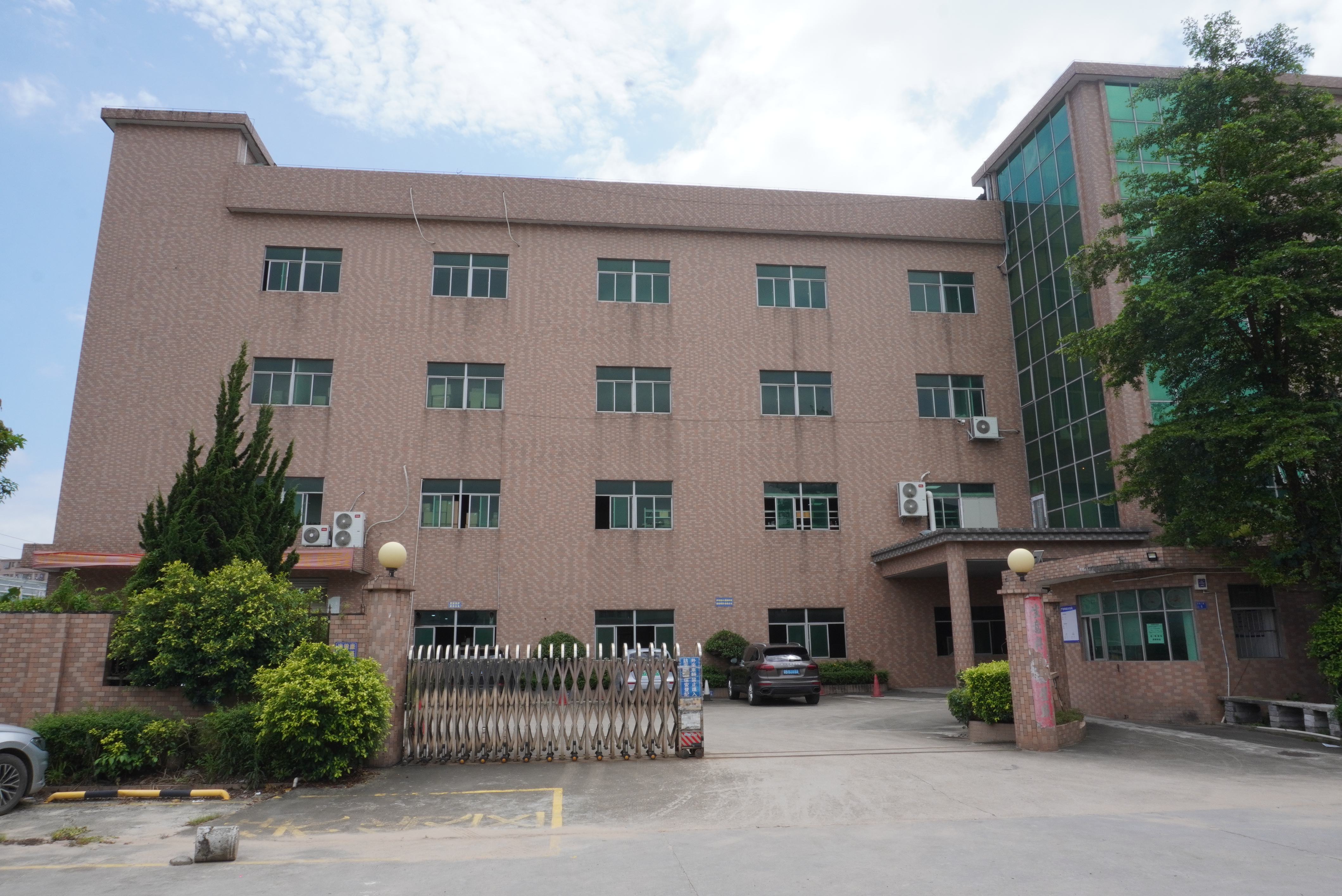
Dongguan Sanlixin Plastic Technology Co.,Ltd
Shenzhen Sanlixin Technology Co., Ltd. and Dongguan Sanlixin Plastic Technology Co., Ltd. is a manufacturer integrating precision plastic mold design, mold opening, single (double) color injection molding, IML injection molding processing, producing various single (double) color, IML process high-end appearance decorative structural parts, two-color buttons, USB dust plugs, panels and other plastic products, providing customers with fast, excellent, Midea all-round service, the company has 15 years of experience in precision plastic mold design, processing and production, with a variety of advanced machine injection molding equipment with excellent quality and fast service to win the trust and strong support of our customers.
The King of Cost-effectiveness in Mass Production: How Injection Molding Crushes 3D Printing with Low Costs?
Price Volatility in Plastic Raw Materials Drives Innovation in Recycling Technologies