Why Plastic Injection Mold Cost Risks Lurk? Start with Design & Material Assessment
Identifies cost risks in plastic injection mold design, material & production.

Table of Contents
- Introduction
1.1 The Hidden Cost Risks in Plastic Injection Molding
1.2 The Core Role of Design & Material Assessment in Risk Mitigation - How Design Decisions Ignite Mold Cost Risks
2.1 Complexity of Part Geometry: The Biggest Design-Driven Risk
2.2 Tolerance Requirements: Precision vs. Cost Trade-Offs
2.3 Parting Line & Gate Design: Overlooking Leads to Rework Costs
2.4 Case Study: Design Optimization Cuts Mold Cost by 30% - Material Assessment: A Critical Step to Uncover Cost Risks
3.1 Key Material Properties Impacting Mold Costs
3.2 Comparative Analysis: Common Plastic Materials & Their Mold Cost Implications
3.3 Material Selection Mistakes: Cost Risks from Misalignment - Manufacturing Processes: Their Direct Influence on Mold Cost Risks
4.1 Traditional Mold-Making Processes: CNC Machining vs. EDM
4.2 Emerging Processes: 3D-Printed Molds vs. Conventional Molds
4.3 Surface Treatment Processes: Added Costs Beyond Basic Mold Making
4.4 Process Comparison Table: Cost, Lead Time & Risk Levels - The Unseen Shield: Risk Assessment Report for Mold Cost Control](#5-the-unseen-shield-risk-assessment-report-for-mold-cost-control)
5.1 Core Components of a Comprehensive Mold Cost Risk Assessment Report](#51-core-components-of-a-comprehensive-mold-cost-risk-assessment-report)
5.2 How to Conduct Risk Identification in the Report](#52-how-to-conduct-risk-identification-in-the-report)
5.3 Risk Analysis: Probability, Impact & Priority Ranking](#53-risk-analysis-probability-impact--priority-ranking)
5.4 Risk Mitigation Strategies in the Report: Actionable Steps](#54-risk-mitigation-strategies-in-the-report-actionable-steps)
5.5 Case Study: A Risk Assessment Report Saves $50,000 in Mold Costs](#55-case-study-a-risk-assessment-report-saves-50000-in-mold-costs) - Best Practices to Mitigate Mold Cost Risks Through Design & Material Management
6.1 Involve Mold Engineers in the Early Design Phase
6.2 Adopt Material Testing Before Finalizing Selection
6.3 Update Risk Assessment Reports Regularly During the Project
6.4 Leverage Digital Tools for Design Simulation & Cost Estimation - Conclusion: Proactive Assessment = Cost Risk Elimination
1. Introduction
1.1 The Hidden Cost Risks in Plastic Injection Molding
1.2 The Core Role of Design & Material Assessment in Risk Mitigation
2. How Design Decisions Ignite Mold Cost Risks
2.1 Complexity of Part Geometry: The Biggest Design-Driven Risk
- Undercuts: These features (recesses or projections that prevent the part from ejecting straight from the mold) require specialized mechanisms like slides, lifters, or unscrewing cores. A single undercut can increase mold cost by 15-30%, as reported by mold manufacturer DME. For example, a plastic housing with two undercuts for snap-fit closures would need two slides, adding $3,000-$8,000 to a base mold cost of $15,000.
- Thin Walls: Walls thinner than 0.8mm (for most plastics) require high-precision machining to ensure uniform material flow. They also increase the risk of mold wear, as the molten plastic exerts more pressure on narrow channels. A mold for a 0.5mm thin-wall medical part costs 25-40% more than a mold for a 1.5mm wall part of the same size.
- Deep Cavities: Cavities deeper than 4x their width require longer tooling and slower machining to avoid chatter (vibrations that ruin surface finish). A mold for a 100mm deep container would take 50% more machining time than a 50mm deep container, raising labor costs by $2,000-$5,000.
2.2 Tolerance Requirements: Precision vs. Cost Trade-Offs
- Higher-Grade Mold Steel: Standard mold steel (e.g., S50C) can’t maintain tight tolerances after repeated heating/cooling cycles. Instead, mold makers use premium steels like H13 or STAVAX, which cost 2-3x more (S50C: $2.50/lb; H13: $6.00/lb).
- Advanced Machining: CNC mills with 5-axis capabilities (instead of 3-axis) are needed to achieve tight tolerances, increasing hourly machining costs from $80-$120 to $150-$250.
- Additional Inspection: Coordinate Measuring Machines (CMMs) are required to verify tolerances, adding $500-$2,000 per mold inspection.
2.3 Parting Line & Gate Design: Overlooking Leads to Rework Costs
- Misaligned Parting Lines: If the parting line is placed on a critical surface (e.g., a clear plastic lens), it creates a visible flash (excess plastic) that requires post-processing. Reworking a mold to reposition the parting line costs $1,500-$4,000 and adds 1-2 weeks to lead time.
- Inadequate Gate Size: A gate that’s too small causes shear heating (damaging the plastic) or short shots (incomplete part filling). Resizing a gate requires machining the mold cavity, costing $800-$2,000. A gate that’s too large leaves a visible mark, requiring trimming—adding $0.10-$0.50 per part to production costs.
2.4 Case Study: Design Optimization Cuts Mold Cost by 30%
- Eliminated two undercuts by repositioning a snap-fit feature.
- Increased the thin wall to 1.0mm (without impacting functionality).
- Relaxed tolerance to ±0.05mm (sufficient for the bracket’s purpose).
3. Material Assessment: A Critical Step to Uncover Cost Risks
3.1 Key Material Properties Impacting Mold Costs
- Melting Temperature: High-melting-point plastics (e.g., PC, PEEK) require molds made from heat-resistant steel (e.g., H13) to avoid warping. Low-melting-point plastics (e.g., PP, PE) can use cheaper steel (e.g., S50C).
- Corrosiveness: Some plastics (e.g., PVC, POM) release corrosive gases during molding, which degrade standard mold steels. These require stainless steel molds (e.g., STAVAX), which cost 30-50% more than carbon steel.
- Abrasion: Filled plastics (e.g., glass-filled nylon) are highly abrasive and wear down mold cavities quickly. These require hardened steel molds (e.g., H13 with 50-55 HRC), which add $2,000-$5,000 to mold costs.
- Shrinkage: High-shrinkage plastics (e.g., PE, PP) require mold cavities to be oversized to compensate. This increases machining time, as mold makers must adjust dimensions repeatedly—adding $1,000-$3,000 to costs.
3.2 Comparative Analysis: Common Plastic Materials & Their Mold Cost Implications
| Material | Melting Temp (°C) | Corrosiveness | Abrasion | Shrinkage (%) | Mold Steel Required | Mold Cost Range ($) | Cost Premium vs. PP (%) |
|---|---|---|---|---|---|---|---|
| PP (Polypropylene) | 160-170 | Low | Low | 1.5-2.5 | S50C (Carbon Steel) | 12,000-15,000 | 0 |
| ABS (Acrylonitrile Butadiene Styrene) | 180-230 | Low | Low | 0.5-1.5 | S50C or H13 (for high volume) | 13,000-17,000 | 8-13 |
| PC (Polycarbonate) | 220-300 | Low | Medium | 0.5-1.0 | H13 (Heat-Resistant Steel) | 18,000-22,000 | 20-47 |
| POM (Polyoxymethylene) | 160-175 | High | High | 1.5-3.5 | STAVAX (Stainless Steel) | 20,000-25,000 | 33-67 |
| PEEK (Polyether Ether Ketone) | 343-380 | Low | High | 1.0-2.0 | H13 or ASP-60 (Super Hard Steel) | 35,000-45,000 | 133-200 |
3.3 Material Selection Mistakes: Cost Risks from Misalignment
- Over-Engineering: Choosing a high-performance material when a lower-cost alternative works. For example, a manufacturer used PEEK for a non-critical electrical insulator (where PC would suffice). The PEEK mold cost $40,000—$22,000 more than a PC mold.
- Underestimating Material-Mold Compatibility: A startup selected PVC for a pipe fitting without realizing its corrosiveness. The initial mold (S50C steel) failed after 500 cycles due to corrosion. The team had to replace it with a STAVAX stainless steel mold, adding $8,000 to costs and 3 weeks to production.
4. Manufacturing Processes: Their Direct Influence on Mold Cost Risks
4.1 Traditional Mold-Making Processes: CNC Machining vs. EDM
CNC Machining
- Best For: Simple to moderately complex molds (e.g., flat surfaces, basic cavities).
- Cost Drivers: Machining time (based on part complexity) and tooling (end mills, drills).
- Hourly Cost: $80-$150 (3-axis CNC) to $150-$250 (5-axis CNC).
- Risk: For complex geometries (e.g., deep cavities, sharp corners), CNC machining may leave rough surfaces, requiring additional finishing (e.g., polishing)—adding $500-$2,000 to costs.
EDM (Electrical Discharge Machining)
- Best For: Complex geometries (e.g., undercuts, fine details) and hard materials (e.g., H13 steel).
- Cost Drivers: Electrode material (copper or graphite) and machining time (slower than CNC).
- Hourly Cost: $120-$200 (EDM sinking) to $180-$300 (wire EDM).
- Risk: EDM is 2-3x slower than CNC for simple parts. Using EDM for a basic mold (e.g., a flat PP part) can increase machining time by 40-60%, raising costs by $3,000-$6,000.
4.2 Emerging Processes: 3D-Printed Molds vs. Conventional Molds
3D-Printed Molds
- Best For: Prototyping, low-volume production (100-10,000 parts), and complex geometries.
- Cost Drivers: 3D printer type (FDM vs. SLA vs. metal 3D printing) and material (resin, metal powder).
- Cost Range: $500-$5,000 (resin molds for prototyping) to $10,000-$30,000 (metal 3D-printed molds for production).
- Risks:
- Short Lifespan: Resin molds last only 100-500 cycles (vs. 100,000+ for steel molds). For high-volume production (100,000 parts), you’d need 200+ resin molds—costing $100,000-$1,000,000 (vs. $20,000 for a steel mold).
- Material Limitations: 3D-printed molds can’t handle high-temperature plastics (e.g., PEEK) or abrasive materials (e.g., glass-filled nylon), leading to premature failure.
Conventional Molds (CNC/EDM)
- Best For: High-volume production (10,000+ parts) and durability.
- Cost Range: $12,000-$50,000 (steel molds for most plastics).
- Risks: High upfront cost. For low-volume production (e.g., 500 parts), a $20,000 steel mold would cost $40 per part in mold amortization—vs. $10 per part for a $5,000 3D-printed mold.
4.3 Surface Treatment Processes: Added Costs Beyond Basic Mold Making
- Polishing: Achieves a smooth part surface (e.g., for clear plastics like PC). Hand polishing costs $200-$500 per cavity; automated polishing (for high volume) costs $1,000-$3,000.
- Coating: Hard chrome coating (for abrasion resistance) adds $1,500-$3,000 per mold. PTFE coating (for non-stick surfaces) costs $800-$2,000.
- Texturing: Creates a textured part surface (e.g., a soft-touch finish). Chemical texturing costs $500-$1,500 per cavity; laser texturing (for precision) costs $1,000-$4,000.
4.4 Process Comparison Table: Cost, Lead Time & Risk Levels
| Process | Cost Range ($) | Lead Time (Weeks) | Best For | Key Cost Risks |
|---|---|---|---|---|
| 3-Axis CNC Machining | 12,000-25,000 | 2-4 | Simple molds, low-moderate volume | Additional finishing for complex parts |
| 5-Axis CNC Machining | 18,000-35,000 | 3-6 | Moderately complex molds | High hourly cost for simple parts |
| Wire EDM | 20,000-40,000 | 4-8 | Complex molds (undercuts) | Slow speed increases labor costs |
| Resin 3D Printing | 500-5,000 | 1-2 | Prototyping, low volume (<10,000 parts) | Short lifespan requires frequent replacement |
| Metal 3D Printing | 10,000-30,000 | 2-5 | Complex, low-volume production | High material cost for large molds |
5. The Unseen Shield: Risk Assessment Report for Mold Cost Control
5.1 Core Components of a Comprehensive Mold Cost Risk Assessment Report
- Project Overview: Details the part (dimensions, functionality, production volume), timeline, and budget. This sets the context for risk evaluation.
- Risk Identification: Lists all potential cost risks from design, material, and process choices (e.g., “Undercut in Part Design: Requires slide mechanism”).
- Risk Analysis: Quantifies each risk’s probability (likelihood of occurring) and impact (cost if it occurs), using a risk matrix (see Section 5.3).
- Risk Prioritization: Ranks risks by severity (high, medium, low) to focus resources on the most critical issues.
- Risk Mitigation Strategies: Outlines specific actions to reduce or eliminate risks (e.g., “Redesign part to remove undercut; estimated cost savings: $3,000”).
5.2 How to Conduct Risk Identification in the Report
- Design Review Checklist: Evaluate design features for cost risks:
- Are there undercuts, thin walls, or deep cavities?
- Are tolerances tighter than necessary?
- Is the parting line/gate positioned optimally?
- Material Compatibility Test: Assess if the chosen material is compatible with standard mold steels, and if it requires special processes (e.g., EDM, coating).
- Process Feasibility Study: Determine if the selected manufacturing process (e.g., CNC vs. 3D printing) aligns with production volume and part complexity.
- Risk ID: MAT-001
- Risk Description: Selected material (POM) is corrosive; standard S50C mold steel will degrade, requiring mold replacement.
- Source: Material selection.
5.3 Risk Analysis: Probability, Impact & Priority Ranking
| Probability\Impact | Low ($1,000-$5,000) | Medium ($5,000-$20,000) | High ($20,000+) |
|---|---|---|---|
| Low (10-30%) | Low Severity | Low Severity | Medium Severity |
| Medium (30-70%) | Low Severity | Medium Severity | High Severity |
| High (70-100%) | Medium Severity | High Severity | Critical |
- Probability: High (90%)—POM’s corrosiveness is well-documented; S50C steel will fail.
- Impact: High ($12,000)—Cost to replace S50C mold with STAVAX mold.
- Severity: High Severity (per matrix).
5.4 Risk Mitigation Strategies in the Report: Actionable Steps
- Action: What will be done (e.g., “Replace POM with ABS”).
- Owner: Who is responsible (e.g., “Material Specialist: Jane Doe”).
- Timeline: When it will be completed (e.g., “Within 1 week of report approval”).
- Cost Impact: Expected savings or additional cost (e.g., “ABS mold cost: $15,000 vs. POM mold cost: $22,000—savings of $7,000”).
- Action: Replace POM with ABS (ABS is non-corrosive, meets part performance requirements).
- Owner: Jane Doe (Material Specialist).
- Timeline: 5 business days.
- Cost Impact: Savings of $7,000 (ABS mold: $15,000 vs. POM mold: $22,000).
5.5 Case Study: A Risk Assessment Report Saves $50,000 in Mold Costs
- DES-001: 0.7mm thin wall requires EDM machining (adds $8,000).
- DES-002: ±0.02mm tolerance requires 5-axis CNC (adds $12,000).
- MAT-001: PEEK requires ASP-60 steel mold (adds $20,000 vs. H13 steel).
- Increase thin wall to 1.0mm (uses 3-axis CNC instead of EDM: saves $8,000).
- Relax tolerance to ±0.03mm (uses 3-axis CNC: saves $12,000).
- Replace PEEK with medical-grade ABS (meets biocompatibility standards; uses H13 steel: saves $20,000).
6. Best Practices to Mitigate Mold Cost Risks Through Design & Material Management
6.1 Involve Mold Engineers in the Early Design Phase
- Identify complex features that increase costs (e.g., undercuts) before they’re baked into the design.
- Suggest design simplifications (e.g., combining two parts into one) that reduce mold complexity.
- According to a 2024 SPE study, companies that involve mold engineers early reduce mold cost overruns by 40%.
6.2 Adopt Material Testing Before Finalizing Selection
- Compatibility Test: Check if the material corrodes or wears standard mold steels.
- Processability Test: Verify if the material flows easily in the mold (avoids short shots or flash).
- Shrinkage Test: Measure how much the material shrinks to avoid mold resizing.
6.3 Update Risk Assessment Reports Regularly During the Project
- New risks are identified (e.g., “Steel price increase: Adds $2,000 to mold cost”).
- Mitigation strategies are adjusted (e.g., “Switch to a lower-cost steel supplier”).
- The team remains aligned on budget and timeline.
6.4 Leverage Digital Tools for Design Simulation & Cost Estimation
- Design Simulation Software (e.g., SolidWorks Simulation): Predicts how the part will perform in use, avoiding over-engineering (e.g., unnecessary thin walls).
- Mold Flow Analysis Software (e.g., Autodesk Moldflow): Simulates plastic flow in the mold, identifying gate placement issues or short shots before mold making.
- Cost Estimation Tools (e.g., Costimator): Calculates mold costs based on design, material, and process choices, providing real-time budget feedback.
7. Conclusion: Proactive Assessment = Cost Risk Elimination
- Involve mold engineers early in design.
- Test materials for compatibility and processability.
- Create and update a comprehensive risk assessment report.
- Use digital tools to simulate and estimate costs.
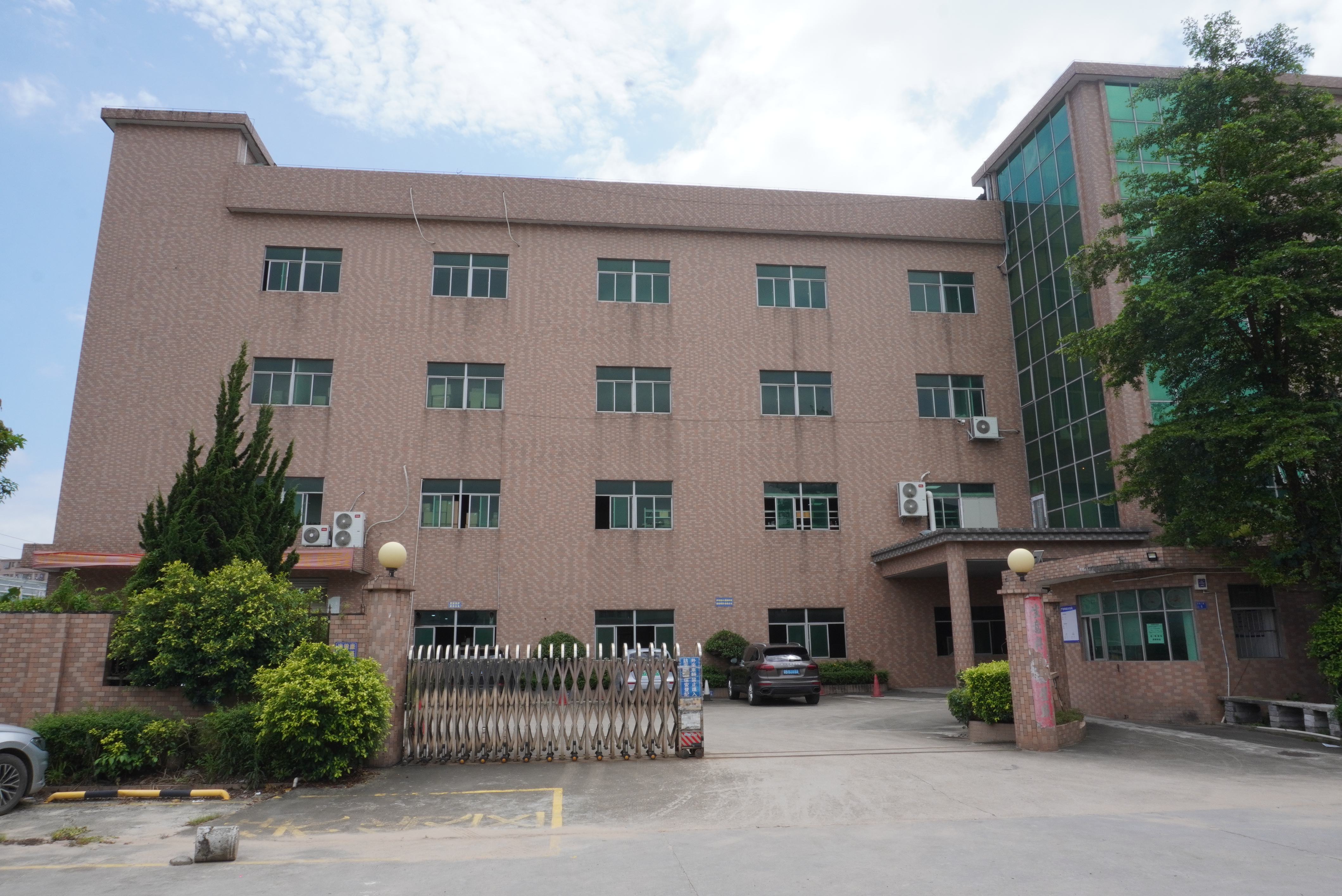
Dongguan Sanlixin Plastic Technology Co.,Ltd
Shenzhen Sanlixin Technology Co., Ltd. and Dongguan Sanlixin Plastic Technology Co., Ltd. is a manufacturer integrating precision plastic mold design, mold opening, single (double) color injection molding, IML injection molding processing, producing various single (double) color, IML process high-end appearance decorative structural parts, two-color buttons, USB dust plugs, panels and other plastic products, providing customers with fast, excellent, Midea all-round service, the company has 15 years of experience in precision plastic mold design, processing and production, with a variety of advanced machine injection molding equipment with excellent quality and fast service to win the trust and strong support of our customers.
Beyond Quotes: Uncovering Hidden Costs in Plastic Injection Mold Supplier Collaboration
How Much Does Carbon Fiber Reinforced Polymer (CFRP) Cost Per kg? A Guide to Pricing Factors & Variations