Injection Molding: A Comprehensive Guide to Single Cavity vs. Multi-Cavity Molds
Introduction to Injection Molding
Injection molding is one of the most widely used methods for manufacturing plastic products. Plastic components are produced by specialized injection molding companies that cater to market demands, making them ideal for household items and medical devices.
Let’s briefly understand how injection molding works.
How Injection Molding Works
During the injection molding process, molten plastic material is injected into a mold cavity under high pressure. This initial step is called die-casting.
The material then cools and solidifies into the perfect shape of the mold.
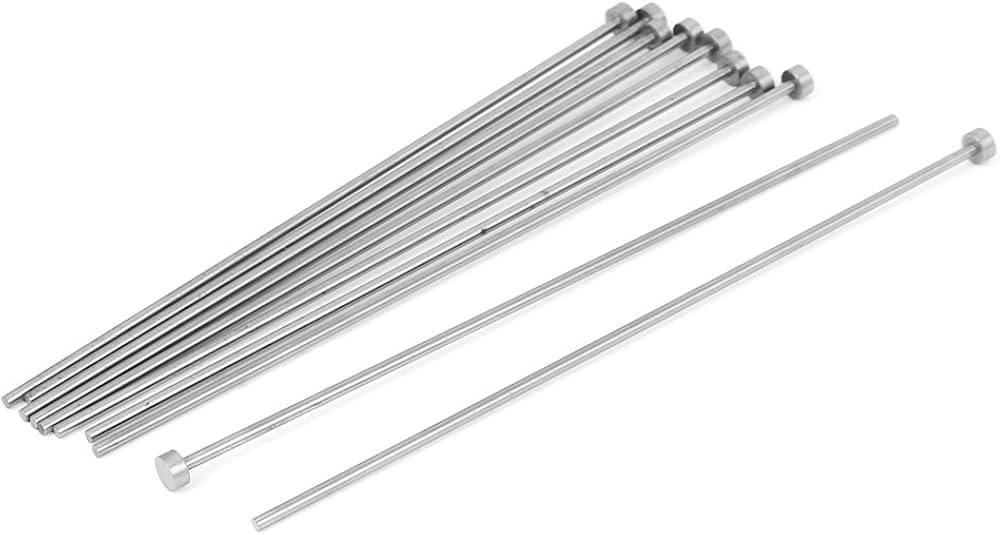
Finally, the molded part is ejected or pushed out of the mold cavity using a tool called an ejector pin.
This process takes place in an injection molding machine. Injection molding produces both single-cavity and multi-cavity molds. The choice of mold type can significantly impact your production efficiency, manufacturing costs, and product quality.
This guide will provide a detailed explanation of single-cavity and multi-cavity molds, including their advantages, differences, and practical applications.
What is a Single-Cavity Mold?
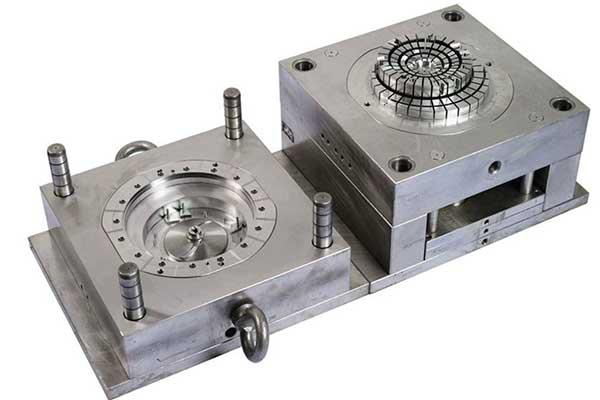
Overview
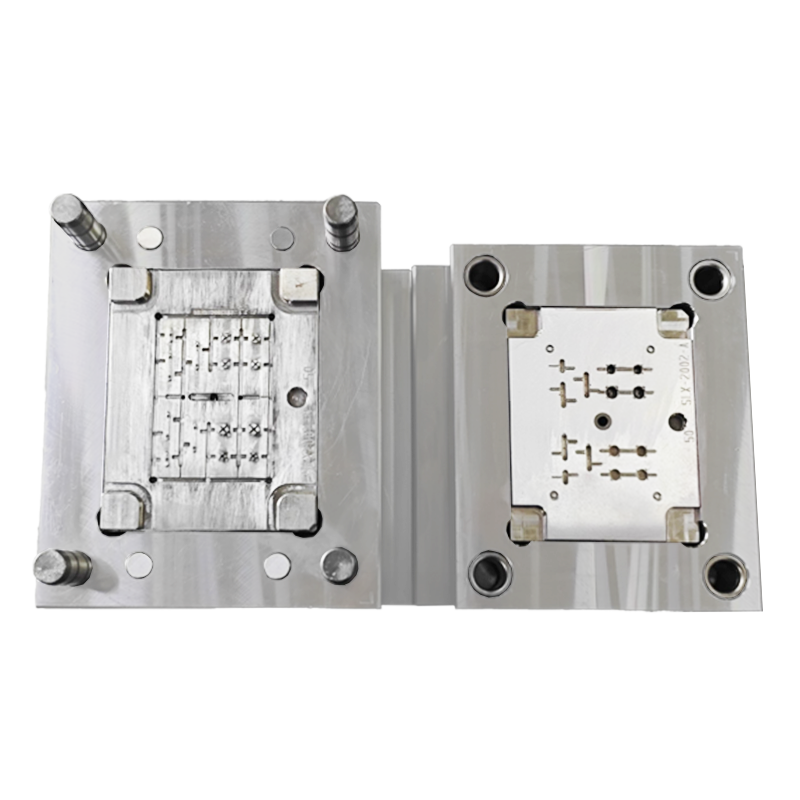
As the name suggests, a single-cavity mold has only one cavity, meaning each injection molding cycle produces only one product. Single-cavity molds are used for prototyping, small-scale production, or complex parts that require precise details.
This mold type focuses on achieving fine details and high quality in the desired part rather than maximizing output. The design of a single-cavity mold emphasizes simplicity.
The structure consists of a single cavity where molten plastic material is injected, cooled, and solidified to form the final product. This mold design is simpler because it focuses on producing a single part.
Single-cavity molds are preferred during the experimental phase or for custom products with complex designs. They are ideal for industries such as medical devices, aerospace, and automation, where precision and reliability are critical.
Advantages of Single-Cavity Molds
Single-cavity molds offer a range of advantages, including:
Precision and Quality Control
Since only one part is produced at a time, monitoring and maintaining high standards is more manageable, allowing for better control over molding conditions.
For example, components like surgical instruments require precise dimensions to function correctly. Single-cavity injection molding ensures this precision.
Lower Initial Investment
The tooling cost for single-cavity molds is lower than that of multi-cavity molds. Therefore, single-cavity molds are a low-cost alternative for businesses testing new designs or addressing uncertain market demands.
For instance, a company designing five product variants can use single-cavity molds to refine each design before mass production.
Design Adjustments
If design changes are needed, they are quicker to implement with single-cavity molds since only one cavity requires adjustment. This is particularly useful in prototyping, where products often undergo multiple revisions.
For example, if a new medical device requires structural changes, the mold allows for modifications without affecting the entire setup.
Ideal for Niche Markets
While not suitable for mass production, single-cavity molds are perfect for small batches of high-quality identical parts.
For example, a company producing specialized automotive components can use a single-cavity mold to meet specific demands without increasing production volume.
What is a Multi-Cavity Mold?
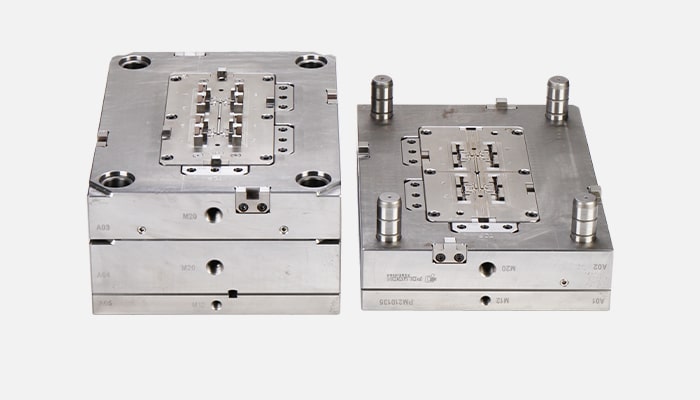
Overview
Multi-cavity injection molding produces multiple parts in a single injection cycle. Multi-cavity molds have multiple cavities, enabling the simultaneous production of several parts.
As a result, multi-cavity molds are extremely helpful for industries requiring large-scale production, such as consumer goods, packaging, and automotive components.
Multi-cavity injection molding ensures a consistent flow of molten plastic to each cavity. This allows for better control over molding conditions, resulting in uniform parts across all cavities.
This type of mold is suitable for producing plastic parts that require consistent and high volumes, such as bottle caps or small electronic housings.
Advantages of Multi-Cavity Molds
Using multi-cavity molds offers numerous advantages, including:
Higher Production Efficiency
Multi-cavity injection molding can produce multiple parts in a single cycle, significantly reducing the time required for large-scale production.
For example, instead of producing only one bottle cap per cycle, a mold with eight cavities can produce eight or more caps at once.
Lower Per-Unit Cost
Although the tooling cost for multi-cavity molds is relatively high, the cost per part decreases as the number of parts produced increases.
This makes it a cost-effective solution for mass production.
Faster Order Fulfillment
Since multi-cavity molds can produce multiple parts at once, they are highly beneficial when dealing with large orders. Faster order fulfillment is particularly advantageous in industries like consumer goods, where quick turnaround times are essential.
Consistent Quality
A well-designed multi-cavity mold ensures that all cavities receive the same amount of molten plastic, resulting in identical parts. For instance, if you are producing food trays, they need to have the same dimensions and quality to meet industry standards.
Optimized Resource Utilization
Multi-cavity molds ensure that each injection molding cycle operates at the machine’s maximum capacity.
This reduces waste in time and effort, enabling manufacturers to produce more products without investing in additional machinery.
Multi-Cavity vs. Family Molds: Key Differences
Family molds, also known as multi-molds, are a set of molds that produce parts of different shapes and functions in a single injection molding cycle. They differ from multi-cavity molds, which produce multiple identical parts at once.
Family molds are called so because they create a "family" of parts that are used together in a single product. For example, a family mold might produce both a plastic lid and its corresponding container in the same cycle.
Cycle Time
Multi-cavity molds have shorter cycle times because they produce multiple identical parts simultaneously. However, family molds have slightly longer production cycles.
This is because each cavity may require adjustments for the different parts being produced, which increases the overall injection cycle time. However, this reduces the need for additional cycles, as family molds can produce many components in one cycle.
Mold Cost
Multi-cavity molds require a relatively high initial cost due to the precision needed to manufacture multiple identical parts. However, the reduced cost per part in high-volume production offsets this expense.
Family molds also have a high initial cost, but they can produce multiple unique components in a single cycle. This significantly reduces overall manufacturing costs.
Design Complexity and Flexibility
Multi-cavity molds are simpler to design because each cavity is identical. This reduces the likelihood of errors in the design.
In contrast, family molds are inherently more complex because each cavity is unique. While they offer greater flexibility by producing unique parts in a single cycle, careful planning is required during the mold design phase.
Production Efficiency
In terms of production efficiency, multi-cavity molds take the lead as they can produce a large number of identical parts immediately.
Family molds are less efficient in cycle time. However, they are more valuable when multiple components are needed in a single run. Thus, they streamline the production process and reduce the need for additional setups, saving time and resources.
Choosing Between Single-Cavity and Multi-Cavity Molds
Selecting the right mold depends on several factors, including your production goals, budget, and product complexity. The table below summarizes the key considerations to help you make a decision:
| Criteria | Single-Cavity Mold | Multi-Cavity Mold |
|---|---|---|
| Production Volume | Low to medium volume | High volume |
| Mold Cost | Lower initial cost | Higher initial cost |
| Cost Per Part | Higher for small batches | Lower for large production runs |
| Design Adjustments | Easier to implement | Complex, affects multiple cavities |
| Cycle Time | Longer, one part per cycle | Shorter, multiple parts per cycle |
| Handling Complex Parts | Suitable for intricate designs | Best for simple, repetitive designs |
| Scalability | Not ideal for large-scale operations | Highly scalable for high-demand production |
For example, if you are a small business testing a new product, a single-cavity mold offers greater flexibility and lower initial costs. However, if you are manufacturing bottle caps or food containers, a multi-cavity mold ensures frequent production of parts and reduces the cost per part.
Make your decision based on your exact requirements, as your choice of mold will directly impact your production efficiency and profitability.

Dongguan Sanlixin Plastic Technology Co.,Ltd
Shenzhen Sanlixin Technology Co., Ltd. and Dongguan Sanlixin Plastic Technology Co., Ltd. is a manufacturer integrating precision plastic mold design, mold opening, single (double) color injection molding, IML injection molding processing, producing various single (double) color, IML process high-end appearance decorative structural parts, two-color buttons, USB dust plugs, panels and other plastic products, providing customers with fast, excellent, Midea all-round service, the company has 15 years of experience in precision plastic mold design, processing and production, with a variety of advanced machine injection molding equipment with excellent quality and fast service to win the trust and strong support of our customers.
Overmolding: A Comprehensive Guide
Is Thermoforming Better Than Injection Molding?