Mastering Injection Molding Surface Finishes: Techniques, Trends, and Best Practices
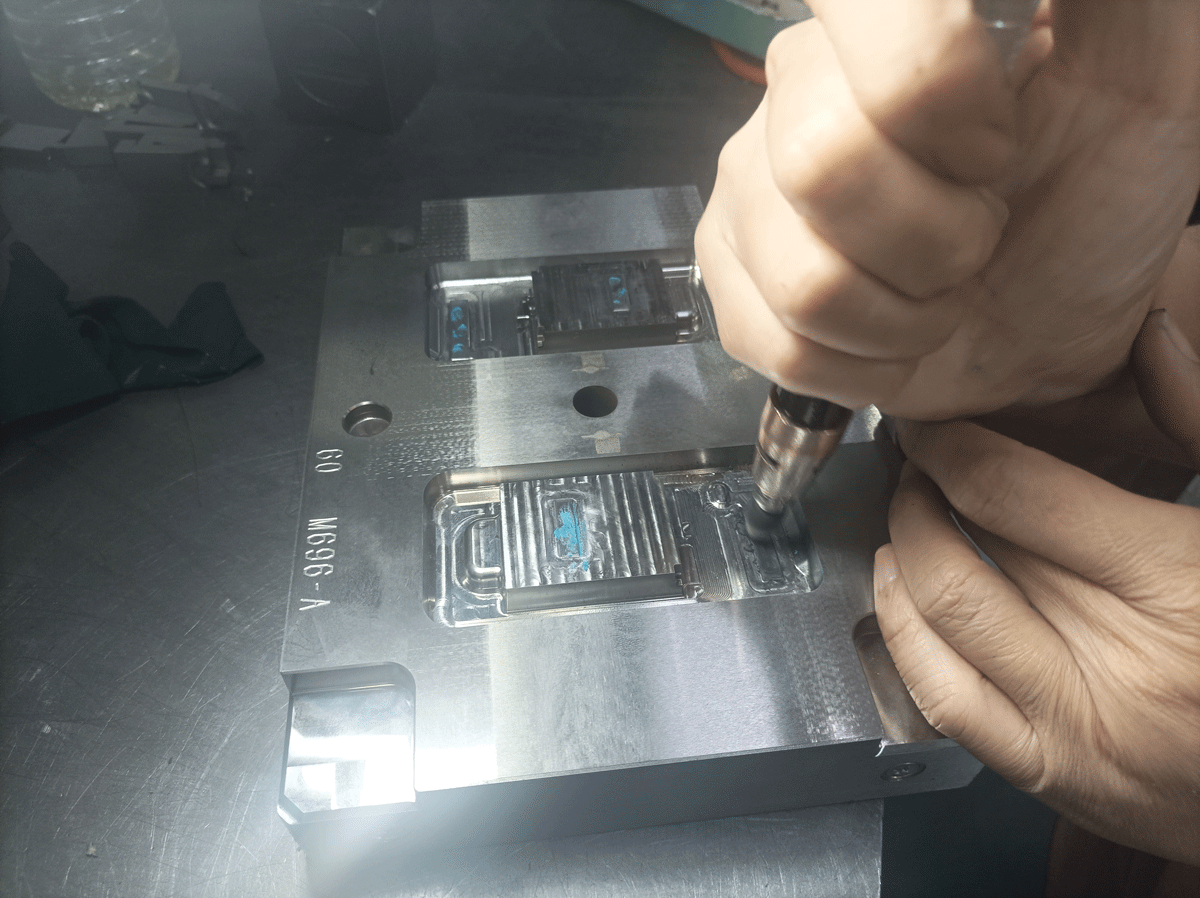
- Common Types of Injection Molding Surface Finishes
- Factors Influencing Surface Finish Selection for Injection Molds
- Expert Insights: Balancing Quality and Cost in Surface Finish Engineering
- General EDM Machining Parameters for Surface Finish Optimization in Injection Molds
- FAQs: Common Questions About Injection Molding Surface Finishes
1.1 Mechanical Finishes: Textures and Polishes
- Polishing: Ranging from #400 grit (semi-gloss) to #2000 grit (mirror finish), polishing eliminates tool marks and creates smooth surfaces ideal for optical components or luxury products. Over-polishing can reduce mold life, so balance is key.
- Texturing: Using processes like chemical etching, laser ablation, or shot blasting, textures add patterns (e.g., leather grain, carbon fiber weave) to hide surface imperfections or enhance grip. Popular standards include the DME Texture Handbook and Mold-Tech Surface Finish Guides.
1.2 Chemical Finishes: Etching and Plating
- Acid Etching: Creates uniform roughness or intricate designs by exposing the mold to acid baths, commonly used for automotive dashboards to mimic soft-touch textures.
- Electroplating: Deposits thin metal layers (e.g., chromium, nickel) on mold surfaces to improve wear resistance and achieve high-gloss finishes, though it adds complexity and cost.
1.3 Functional Coatings: Lubrication and Anti-Corrosion
- Parylene Coatings: Ultra-thin, inert films that reduce friction and protect against chemical corrosion, critical for medical device molds.
- Teflon® Coatings: Lower surface tension to facilitate part ejection, especially for sticky resins like polyvinyl chloride (PVC) or polycarbonate (PC).
2. Factors Influencing Surface Finish Selection for Injection Molds
2.1 Material Properties: Resin Behavior and Shrinkage
- Crystalline resins (e.g., polyethylene, polypropylene) show more pronounced surface shrinkage on highly polished molds, requiring texture to mask sink marks.
- Amorphous resins (e.g., acrylic, ABS) excel with high-gloss finishes but are prone to flow lines if mold surfaces are too rough.
2.2 Part Function: Aesthetics vs. Performance Requirements
- Aesthetic parts (consumer electronics, toys) demand consistent surface quality, often requiring Class A finishes (Ra ≤ 0.2μm).
- Functional parts (mechanical components, gears) prioritize surface roughness for adhesion or reduced friction, using finishes like grit-blasted textures (Ra 1.6–6.3μm).
2.3 Mold Design: Complexity and Feature Geometry {#design}
- Thin walls or deep ribs may require smoother finishes to prevent ejection issues.
- Undercuts or multi-cavity molds need uniform textures to ensure consistent part release across all cavities.
3. Expert Insights: Balancing Quality and Cost in Surface Finish Engineering
4. General EDM Machining Parameters for Surface Finish Optimization in Injection Molds
|
Parameter
|
Rough Texturing (Coarse)
|
Semi-Gloss Finishing
|
High-Gloss Polishing
|
Impact on Surface Finish
|
|
Discharge Current (A)
|
15-30
|
8-15
|
2-8
|
Lower current = finer surface
|
|
Pulse On Time (μs)
|
100-200
|
50-100
|
10-50
|
Shorter pulses reduce crater size
|
|
Electrode Type
|
Graphite (for roughing)
|
Copper-Graphite Composite
|
Pure Copper (for finishing)
|
Copper ensures smoother sparking
|
|
Dielectric Fluid
|
Mineral Oil
|
Deionized Water
|
Synthetic EDM Oil
|
Water for precision, oil for heat dissipation
|
|
Spark Gap (μm)
|
80-120
|
40-80
|
10-40
|
Smaller gaps enable finer details
|
5. FAQs: Common Questions About Injection Molding Surface Finishes
How do I choose between a polished and textured surface finish?
Can surface finishes affect part ejection and cycle time?
How do I maintain consistent surface finishes across multiple mold cavities?
What’s the cost difference between basic and premium surface finishes?

Dongguan Sanlixin Plastic Technology Co.,Ltd
Shenzhen Sanlixin Technology Co., Ltd. and Dongguan Sanlixin Plastic Technology Co., Ltd. is a manufacturer integrating precision plastic mold design, mold opening, single (double) color injection molding, IML injection molding processing, producing various single (double) color, IML process high-end appearance decorative structural parts, two-color buttons, USB dust plugs, panels and other plastic products, providing customers with fast, excellent, Midea all-round service, the company has 15 years of experience in precision plastic mold design, processing and production, with a variety of advanced machine injection molding equipment with excellent quality and fast service to win the trust and strong support of our customers.
Blow Molding vs. Injection Moldin
Electronics Housing Injection Molding: Innovation, Efficiency, and Trade-offs