The 'Invisible Hero' in Medical and Aerospace Fields: Why High-Precision Injection Molding Becomes the Preferred Solution for Precision Components
High precision injection molding minimizes material waste, producing complex geometries with repeatable quality for automotive and electronics.
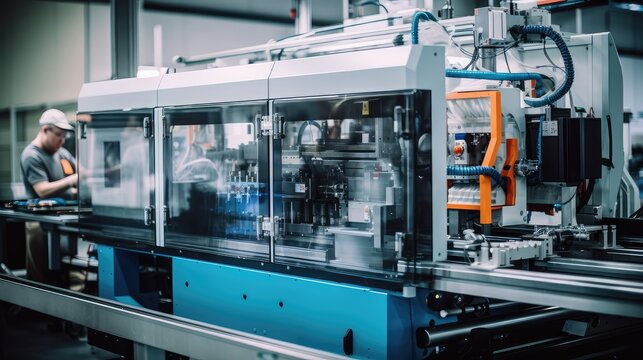
Table of Contents
- High-Precision Injection Molding in Aerospace Industry: Enabling Space Exploration and Aerial Safety
1. Introduction: Unveiling the "Invisible Hero"
2. What is High-Precision Injection Molding? Core Definitions and Technical Benchmarks
2.1 Key Definitions
- Dimensional Tolerance: The allowable variation in a part’s size. For conventional injection molding, tolerances typically range from ±0.1mm to ±0.5mm. In high-precision injection molding, however, tolerances can be as tight as ±0.001mm—thinner than a human hair. This level of precision ensures parts fit together seamlessly, even in microscale applications.
- Repeatability: The ability to produce identical parts across thousands (or millions) of cycles. High-precision systems achieve repeatability rates of 99.9% or higher, a critical factor for industries where consistency is non-negotiable (e.g., medical device production).
- Surface Finish: The smoothness or texture of a part’s surface. High-precision molding can achieve surface finishes with Ra (arithmetic mean roughness) values as low as 0.02μm, eliminating the need for post-processing and reducing the risk of contamination in medical settings.
2.2 Technical Benchmarks for High-Precision Injection Molding
- Temperature Control: Mold and melt temperatures must be regulated within ±0.1°C. Even minor fluctuations can cause dimensional errors, so high-precision machines use advanced heating/cooling systems (e.g., proportional-integral-derivative (PID) controllers) to maintain stability.
- Injection Pressure Precision: Injection pressure must be controlled to ±1 bar (14.5 psi). This ensures uniform material flow into the mold cavity, preventing defects like voids or warping.
- Cycle Time Consistency: Cycle times (the time to produce one part) must vary by no more than ±0.1 seconds. This consistency is achieved through servo-driven motors and real-time monitoring systems that adjust parameters mid-cycle.
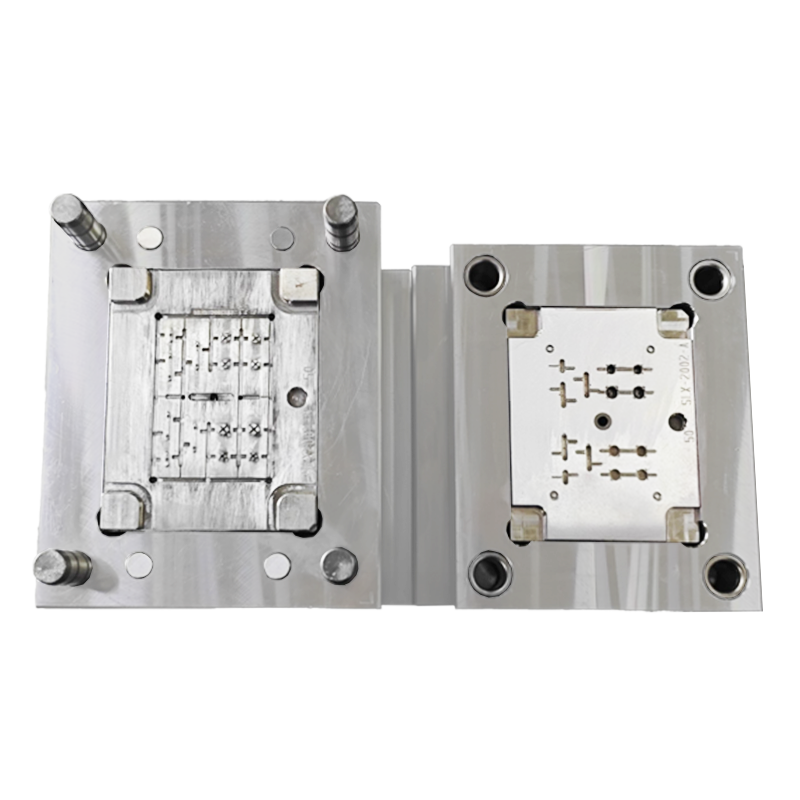
- Mold Quality: The mold itself must be machined with ultra-precision. High-precision molds are often made from hardened steel (e.g., H13) and polished to a mirror finish using electrical discharge machining (EDM) or laser ablation, ensuring the mold cavity exactly replicates the desired part geometry.
3. The Technical Backbone of High-Precision Injection Molding: Key Components and Processes
3.1 High-Precision Molding Machines
- Injection Unit: Uses a servo-driven screw to melt and inject material. Unlike conventional machines (which use hydraulic systems), high-precision units use electric servo motors for faster, more accurate control. These motors can adjust the screw speed and injection rate in real time, ensuring consistent material flow.
- Clamping Unit: Holds the mold closed during injection. High-precision clamping units use linear guides (instead of sliding rails) to minimize friction, ensuring the mold is aligned to within ±0.005mm. Clamping force is also controlled precisely—too little force causes flash (excess material), too much can damage the mold or distort the part.
- Control System: The "brain" of the machine. Modern high-precision systems use computer numerical control (CNC) with touchscreen interfaces, allowing operators to program parameters (temperature, pressure, speed) with micron-level accuracy. Many systems also include machine learning (ML) algorithms that analyze data from sensors (e.g., pressure, temperature, cycle time) to optimize processes and detect defects before they occur.
3.2 Precision Molds: The "Blueprint" for Perfect Parts
- Micro-Machined Cavities: Using EDM or micro-milling, mold cavities are machined to tolerances of ±0.0005mm. This is critical for producing microscale parts (e.g., medical catheters, aerospace sensor components) with intricate details.
- Cooling Channels: Strategically placed cooling channels ensure uniform cooling of the molten material. In high-precision molds, channels are often 3D-printed to follow the part’s geometry, reducing cooling time and minimizing warping.
- Ventilation: Tiny vents (0.001mm to 0.002mm wide) allow air to escape from the mold cavity during injection. Without proper ventilation, air trapped in the cavity causes bubbles or burn marks—fatal flaws in medical or aerospace parts.
3.3 Advanced Materials for High-Precision Applications
- Engineering Plastics: Materials like polyetheretherketone (PEEK), polytetrafluoroethylene (PTFE), and polycarbonate (PC) are popular for their high strength, heat resistance, and biocompatibility. PEEK, for example, is used in medical implants because it can withstand body temperatures and resist corrosion, while PTFE is used in aerospace seals for its low friction and chemical resistance.
- Metals and Ceramics: For applications requiring extreme durability (e.g., aerospace engine components), high-precision molding can use metal injection molding (MIM) or ceramic injection molding (CIM). These processes use powdered metals (e.g., titanium, stainless steel) or ceramics (e.g., alumina) mixed with a binder, which is injected into a mold, debinded, and sintered to form a dense, precise part.
- Biocompatible Materials: In medical applications, materials must meet strict regulatory standards (e.g., FDA approval). Biocompatible plastics like polyethylene (PE) and polypropylene (PP) are used in surgical tools and implantable devices, as they do not trigger immune reactions.
3.4 Quality Control: Ensuring Perfection at Every Step
- In-Process Monitoring: Sensors embedded in the mold and machine track parameters like pressure, temperature, and part weight in real time. If a parameter deviates from the set range, the machine automatically pauses or adjusts, preventing defective parts from being produced.
- Post-Production Inspection: Finished parts are inspected using advanced tools like coordinate measuring machines (CMMs), which use lasers or touch probes to measure dimensions to within ±0.0001mm. Other tools include optical comparators (for surface finish analysis) and X-ray machines (to detect internal defects like voids).
- Statistical Process Control (SPC): Data from in-process and post-production tests is analyzed using SPC software to identify trends and prevent future defects. For example, if SPC data shows that part dimensions are drifting slightly over time, operators can adjust the mold temperature or injection pressure to correct the issue.
4. High-Precision Injection Molding in Medical Field: Saving Lives Through Microscopic Precision
4.1 Key Medical Applications of High-Precision Injection Molding
4.1.1 Implantable Medical Devices
- Pacemaker Housings: Made from biocompatible plastics like PEEK, these housings must be hermetically sealed to protect internal electronics from body fluids. High-precision molding ensures the housing has a uniform wall thickness (±0.01mm) and a seamless seal, preventing leaks that could cause device failure.
- Orthopedic Implant Components: Joint replacements (e.g., hip, knee) use components like femoral heads and acetabular cups, which must fit together with zero tolerance to reduce wear and extend the implant’s lifespan. High-precision molding produces these parts with dimensional accuracy of ±0.005mm, ensuring a perfect fit.
- Drug Delivery Systems: Insulin pumps and implantable drug reservoirs use microscale components (e.g., valves, nozzles) that control the flow of medication. These components are often as small as 0.1mm in diameter, and high-precision molding can produce them with repeatability rates of 99.9%, ensuring consistent drug dosing.
4.1.2 Minimally Invasive Surgical (MIS) Tools
- Catheter Tips: Catheters are used to deliver fluids, remove tissue samples, or perform procedures like angioplasty. The tip of a catheter must be smooth (Ra < 0.1μm) to avoid damaging blood vessels, and its dimensions must be precise (±0.02mm) to fit through narrow passageways. High-precision molding achieves this with a combination of micro-machined molds and biocompatible materials like PE.
- Surgical Forceps and Scissors: MIS tools often have jaws or blades that are smaller than 1mm in size. These components must be strong enough to cut tissue but precise enough to avoid accidental damage. High-precision molding uses reinforced plastics (e.g., glass-filled nylon) to produce these parts with sharp edges and tight tolerances.
4.1.3 Diagnostic Equipment
- Lab-on-a-Chip (LOC) Devices: LOC devices integrate multiple laboratory functions (e.g., sample preparation, analysis) onto a single chip, often smaller than a credit card. These chips have microchannels (0.05mm to 0.1mm wide) that transport fluids, and high-precision molding ensures the channels are uniform and free of defects, preventing fluid blockages.
- Imaging Sensor Housings: CT scanners and MRI machines use sensors that detect radiation or magnetic signals. The housing for these sensors must be made from materials that do not interfere with imaging (e.g., non-metallic plastics) and must be dimensionally stable to ensure the sensor is aligned correctly. High-precision molding produces these housings with tolerances of ±0.003mm, ensuring accurate imaging.
4.2 Why Medical Industry Prefers High-Precision Injection Molding
4.2.1 Regulatory Compliance
- Traceability: High-precision machines record every parameter (temperature, pressure, cycle time) for each part, creating a digital audit trail that regulators can review. This traceability is critical for recalling defective parts if issues arise.
- Consistency: With repeatability rates of 99.9%, high-precision molding ensures every part meets the same specifications, reducing the risk of non-compliant parts slipping through quality control.
- Biocompatibility: High-precision molding can use FDA-approved materials, and the process itself (which uses closed molds and minimal human contact) reduces the risk of contamination.
4.2.2 Cost-Effectiveness at Scale
4.2.3 Microscale Precision
5. High-Precision Injection Molding in Aerospace Industry: Enabling Space Exploration and Aerial Safety
5.1 Key Aerospace Applications of High-Precision Injection Molding
5.1.1 Aircraft Interior and Exterior Components
- Cabin Interior Components: Seat frames, overhead bin latches, and control panels are often made from lightweight plastics like PC or acrylonitrile butadiene styrene (ABS). High-precision molding ensures these parts fit together seamlessly (tolerances of ±0.02mm) and can withstand repeated use (e.g., bin lat

Dongguan Sanlixin Plastic Technology Co.,Ltd
Shenzhen Sanlixin Technology Co., Ltd. and Dongguan Sanlixin Plastic Technology Co., Ltd. is a manufacturer integrating precision plastic mold design, mold opening, single (double) color injection molding, IML injection molding processing, producing various single (double) color, IML process high-end appearance decorative structural parts, two-color buttons, USB dust plugs, panels and other plastic products, providing customers with fast, excellent, Midea all-round service, the company has 15 years of experience in precision plastic mold design, processing and production, with a variety of advanced machine injection molding equipment with excellent quality and fast service to win the trust and strong support of our customers.
From Materials to Costs: How High-Precision Injection Molding Balances Performance, Efficiency, and Mass Production Needs
How Does High-Precision Injection Molding Achieve Micron-Level Tolerances? A Core Technical Analysis from Equipment to Processes