From industrial parts to daily necessities: How does Custom Plastic help products get rid of "homogenization"?
Custom plastic fits multi-scenario needs, with adjustable material hardness, color and shape, matching functions & aesthetics for differentiated products.

Table of Contents
1. Introduction: The "Homogenization" Pain Point & The Value of Custom Plastic
2. Core Section: Three Core Capabilities of Custom Plastic to Break Homogenization
2.1 Material Customization: "Tailor-Made Materials" for Different Scenarios, Differentiation from the Root
Industrial Parts Scenario: Materials That Withstand Extreme Conditions
- For automotive engine peripheral parts (e.g., sensor housings, wire harness brackets), Custom Plastic develops a modified PA66 composite material mixed with 30% glass fiber and heat stabilizers. This material has a heat deflection temperature of 200℃ (40% higher than standard PA66) and maintains structural stability even after 5,000 hours of high-temperature operation. Unlike generic engine parts that need replacement every 2 years, these custom parts last 4–5 years, reducing maintenance costs for automakers.
- For chemical plant pipeline connectors, Custom Plastic creates a PTFE-based composite with added corrosion inhibitors. This material resists 95% of acidic and alkaline solutions (including 30% hydrochloric acid and 50% sodium hydroxide) and has a service life 3x longer than generic PVC connectors. A chemical plant in Jiangsu replaced generic connectors with these custom parts, cutting annual replacement costs by $120,000.
Daily Necessities Scenario: Materials That Meet 细分 Consumer Needs
- For children’s tableware (e.g., bowls, spoons), Custom Plastic uses food-grade PP resin that meets FDA 21 CFR Part 177.1520 standards, with no BPA, phthalates, or heavy metals. It also adds an odor-eliminating additive to ensure the tableware has no plastic smell even after repeated boiling. A children’s product brand launched this custom tableware line, and sales surged 3x within 3 months—parents were willing to pay a 50% premium for safety.
- For cosmetic storage boxes, Custom Plastic develops a matte ABS material with scratch-resistant coating (hardness up to HB, per ASTM D3363) and UV stabilizers. Unlike generic glossy boxes that show scratches after 1 week of use, these custom boxes retain their matte finish for over a year. A beauty brand paired this material with pastel colors, creating a "minimalist cosmetic organizer" that became a social media trend—consumers praised it for "looking expensive and lasting long."
2.2 Shape & Function Customization: From "Standard Models" to "Exclusive Models", Aligning with Core Product Needs
Industrial End: "Machine-Specific" Shapes to Improve Adaptation & Efficiency
- For electric vehicle battery compartments, a Custom Plastic provider designed an integrated plastic bracket with irregular curves that fits the compartment’s narrow space. Unlike generic rectangular brackets that required 3 additional mounting plates, this custom bracket is installed in one step, reducing assembly time by 40% and eliminating the risk of loose connections. A new energy vehicle manufacturer adopted this bracket, and the battery assembly pass rate rose from 85% to 99%.
- For smart factory robotic arms, Custom Plastic created a non-standard connector with a built-in cable management channel. Generic connectors require separate cable ties to organize wires, which can get tangled during arm movement. The custom connector’s channel keeps wires neat, reducing maintenance downtime by 25% per robot. A smart factory in Guangdong replaced 500 generic connectors with these custom parts, saving $30,000 in annual maintenance costs.
Consumer End: "User-Centric" Shapes to Enhance Usability & Aesthetics
- For outdoor water bottles, Custom Plastic created a shape with a non-slip 凹槽 (groove) on the body and a detachable 挂扣 (carabiner) integrated into the lid. Unlike generic bottles that slip out of gloved hands and require separate clips to attach to backpacks, this custom bottle is easy to grip and carry. An outdoor brand launched this bottle, and 78% of reviewers mentioned "usability" as the top reason for purchase—sales exceeded 100,000 units in 6 months.
- For small apartment storage, Custom Plastic developed a modular drawer divider with adjustable widths (from 10cm to 40cm) and customizable compartments. Generic dividers have fixed sizes that leave gaps in odd-sized drawers; the custom divider can be adjusted to fit any drawer, maximizing storage space. A home brand sold this divider as part of a "small-space solution" set, and it became a bestseller—consumers commented, "Finally, a divider that fits my weirdly shaped drawer!"
2.3 Process Empowerment: Precise Control of Details, Enhancing the "Unique Texture" of Products
Key Processes of Custom Plastic & Their Differentiation Effects
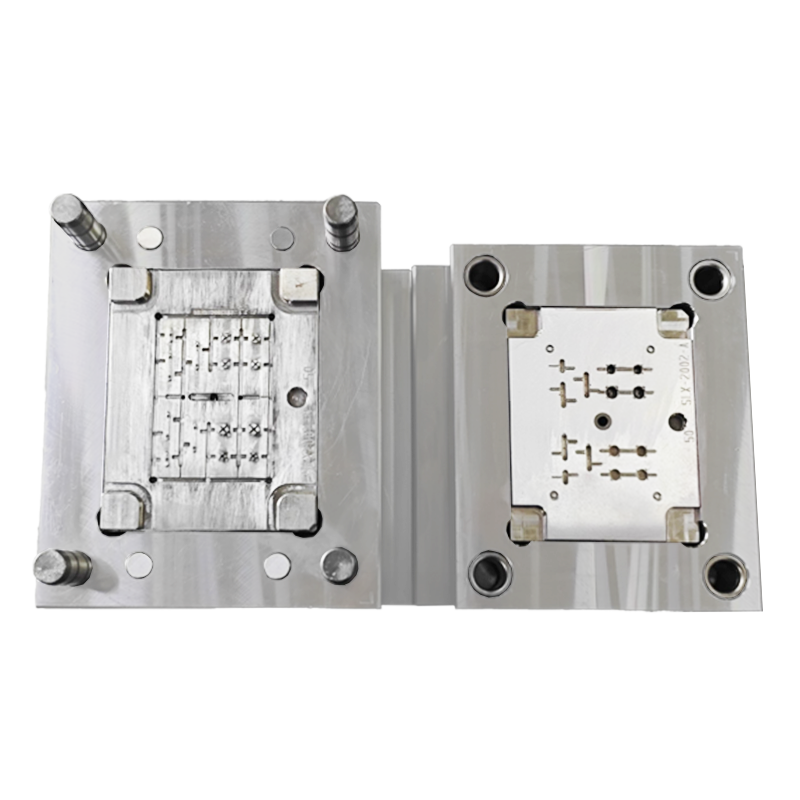
- Injection Molding with Precision Molds: Using CNC-machined molds with a surface finish of Ra < 0.2μm (vs. Ra 1.6μm for generic molds), ensuring parts have smooth edges and no flash. For example, Custom Plastic produces industrial dashboard housings with this process—they have a uniform matte texture that doesn’t reflect light, improving readability for operators. Generic dashboards often have uneven surfaces and visible mold lines, making them look unprofessional.
- Surface Coating: Applying custom coatings like anti-fingerprint layers or soft-touch finishes. For consumer electronics cases, Custom Plastic uses a nano anti-fingerprint coating that reduces fingerprint marks by 90% (vs. 50% for generic coatings). A smartphone accessory brand used this process for its plastic cases, and reviewers noted, "It stays clean even with oily hands—unlike other cases that get smudged easily."
- Laser Engraving & Embossing: Adding exclusive logos, patterns, or texture details. For luxury cosmetic boxes, Custom Plastic uses laser engraving to create subtle brand logos and emboss the interior with a velvet-like texture. Generic cosmetic boxes have printed logos that fade over time and plain interiors—this custom detail makes the product feel premium, justifying a higher price.
Comparison with Generic Plastic Products
|
Aspect
|
Generic Plastic Products
|
Custom Plastic Products
|
|
Surface Finish
|
Rough edges, visible mold lines, uneven color
|
Smooth edges, no flash, uniform texture
|
|
Durability of Details
|
Printed logos fade in 3 months; coatings peel off
|
Engraved logos last 2+ years; coatings resist wear
|
|
Tactile Experience
|
Hard, plastic-like feel
|
Soft-touch or matte finish, comfortable to hold
|
3. Case Support: Proving Custom Plastic’s De-Homogenization Effect with Specific Scenarios
3.1 Industrial Case: Automotive Component Manufacturer’s Breakthrough in High-End Supply Chains
- Material Customization: The provider created a modified PP composite with added electromagnetic interference (EMI) shielding particles. This material not only withstands the 180℃ temperature of EV battery compartments but also blocks 95% of EMI (critical for sensor accuracy). Generic ABS housings only block 40% of EMI, leading to sensor errors.
- Shape Customization: Based on the high-end EV’s battery compartment blueprint, the provider designed an irregular, curved housing that fits the narrow space. It integrated a cable clip into the shape, eliminating the need for separate fasteners—reducing assembly steps from 3 to 1.
- Process Optimization: Using a precision injection mold and anti-corrosion coating, the housing had a smooth surface with no mold lines, meeting the high-end brand’s quality standards.
- Adaptation Rate: From 70% (generic housings often required modification) to 98% (the custom housing fit perfectly without adjustments).
- Market Access: The manufacturer successfully entered the supply chain of a German high-end EV brand—something it couldn’t achieve with generic products.
- Profit Margin: Rose from 6% to 18%, as the high-end brand was willing to pay a premium for the custom, high-performance housing.
3.2 Consumer Case: Home Brand’s Custom Storage Series Becoming a Niche Hit
- Size Customization: Customers could choose from 5 width options (15cm–45cm) and 3 height options (10cm–25cm) to fit their specific cabinet sizes. The brand used modular Custom Plastic designs, so each size was produced quickly without high mold costs.
- Color & Texture Customization: Customers could select from 8 matte colors (e.g., sage green, warm gray) to match their home decor, instead of the standard transparent or white. The plastic was coated with a scratch-resistant layer to maintain the color and texture.
- Function Add-Ons: Optional features like dividers, pull-out trays, or label holders were available—all integrated into the Custom Plastic design.
- Sales Growth: The custom series sold 20,000 units in the first month, 2x more than the standard storage boxes.
- Customer Loyalty: 65% of buyers repurchased additional sizes, and many shared photos of the storage boxes in their homes on social media—creating free marketing.
- Price Premium: The custom boxes were priced 30% higher than standard ones, but 80% of customers said the price was "worth it" for the perfect fit and design.
4. Conclusion: Value Summary + Outlook, Guiding Readers to Act
- For industrial enterprises: Turn generic parts into "machine-specific, high-performance" components, helping them escape price wars, enter high-end markets, and build long-term customer relationships.
- For consumer brands: Transform ordinary daily necessities into "user-centric, aesthetically unique" products, meeting 细分 needs and turning customers into brand advocates.
- For consumers: Provide goods that fit their lifestyles, values, and usage habits—no longer settling for "one-size-fits-all" options.
Outlook & Actionable Guidance
For Industrial Professionals
- Audit Your Pain Points: Identify which parts are losing competitiveness due to generic designs (e.g., low adaptation rates, frequent replacements).
- Start Small: Partner with a Custom Plastic provider to test one high-value part (e.g., a sensor housing or bracket) first—measure the impact on adaptation rate and profit margin before scaling.
- Prioritize Scenario Fit: Focus on materials and shapes that solve specific problems (e.g., high-temperature resistance for engine parts) rather than just "making something different."
For Consumer Brand Owners
- Listen to Customers: Collect feedback on unmet needs (e.g., "storage boxes that fit small cabinets," "tableware safe for toddlers").
- Leverage Custom Plastic for Details: Use processes like color customization or soft-touch coatings to create a unique aesthetic—small details often drive big differences in consumer perception.
- Market the "Custom Advantage": Highlight how your Custom Plastic products solve specific problems (e.g., "fits any cabinet size" or "non-toxic for kids") in your marketing—this resonates more than generic claims like "high quality."
For Consumers
- Look for Custom Plastic Signals: Check product descriptions for terms like "custom size," "food-grade material," or "scratch-resistant coating"—these indicate Custom Plastic advantages.
- Support Niche Brands: Smaller brands often use Custom Plastic to differentiate themselves, offering more unique options than big-box retailers.
- Provide Feedback: Tell brands what you need (e.g., "I want a water bottle with a wider mouth for ice")—many are willing to adopt Custom Plastic to meet customer demands.
Stay Connected

Dongguan Sanlixin Plastic Technology Co.,Ltd
Shenzhen Sanlixin Technology Co., Ltd. and Dongguan Sanlixin Plastic Technology Co., Ltd. is a manufacturer integrating precision plastic mold design, mold opening, single (double) color injection molding, IML injection molding processing, producing various single (double) color, IML process high-end appearance decorative structural parts, two-color buttons, USB dust plugs, panels and other plastic products, providing customers with fast, excellent, Midea all-round service, the company has 15 years of experience in precision plastic mold design, processing and production, with a variety of advanced machine injection molding equipment with excellent quality and fast service to win the trust and strong support of our customers.
Silicon Mold Making 101: A Beginner’s Guide to Crafting Flexible, Detail-Perfect Molds
FAQ for Injection Plastic Parts: How to improve precision, reduce costs, and adapt to different industries?