The King of Cost-effectiveness in Mass Production: How Injection Molding Crushes 3D Printing with Low Costs?
“Affordable” precisely fits "cheap 3d printing service", highlighting that the 3D printing service can be obtained at a low cost, enabling those on a tight budget to access 3D printing easily.
Table of Contents
- Core Differences: The Technical Divide Between 3D Printing and Injection Molding2.1 Technical Principles and Production Logic2.2 Cost Structure Comparison Table2.3 Production Efficiency and Capacity Ceilings
- Three Cost Advantages Where Injection Molding Crushes 3D Printing3.1 Cost Fission Driven by Economies of Scale3.2 The Cost-Reducing Magic of Automated Production3.3 The Hidden Cost Advantage of Quality Consistency
- Multi-Dimensional Comparison: A Comprehensive Battle from Materials to Performance4.1 The War of Material Selection Freedom4.2 Mechanical Performance and Surface Quality Comparison Table4.3 Expanding the Boundaries of Design Feasibility
1. Introduction {#introduction}
2. Core Differences: The Technical Divide Between 3D Printing and Injection Molding {#core-differences}
2.1 Technical Principles and Production Logic
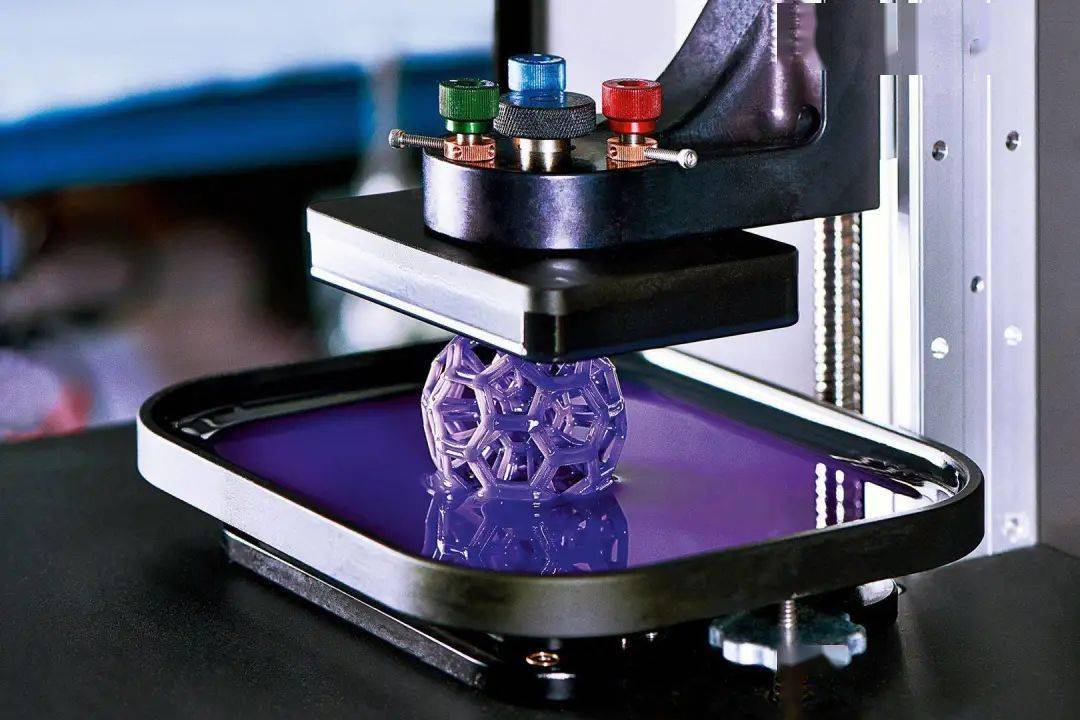
- 3D Printing (Additive Manufacturing): Constructs 3D objects by layer-by-layer material deposition (e.g., PLA, ABS, photopolymer resins), relying directly on digital models without molds. Suitable for single-unit customization and complex structure prototyping, but its "linear accumulation" production process struggles to break through capacity bottlenecks.
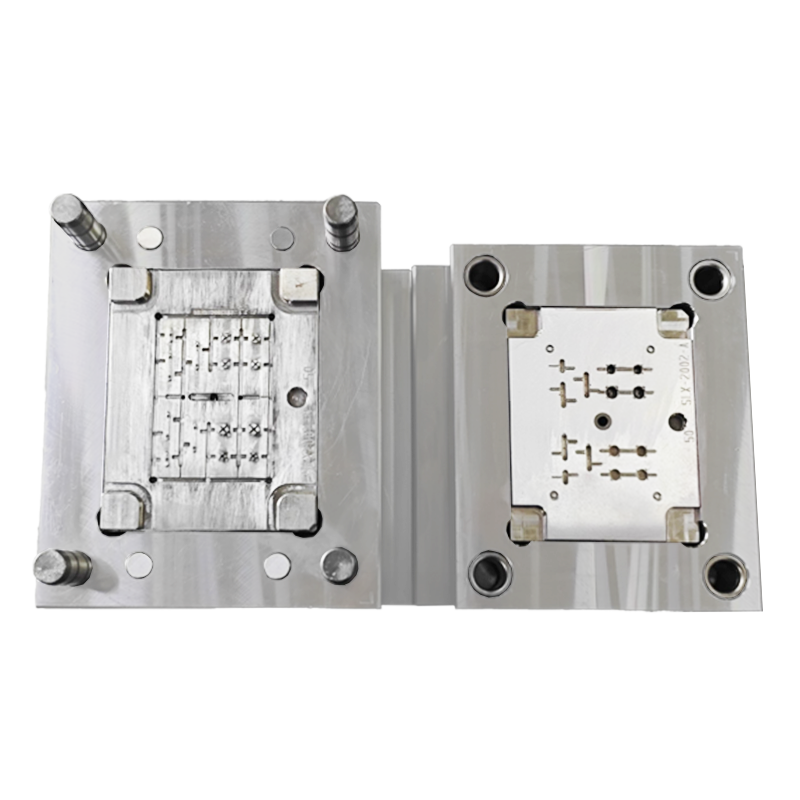
- Injection Molding (Subtractive Manufacturing): Injects molten plastic into precision molds under high pressure, forming parts after cooling and demolding. Its core lies in upfront mold development—once the mold is ready, it enables "non-linear mass replication," with daily mold output reaching tens of thousands of pieces, making it the standard for industrial-scale production.
2.2 Cost Structure Comparison Table
|
Cost Dimension
|
3D Printing
|
Injection Molding
|
|
Initial Investment
|
Low (Equipment: 50,000–500,000 RMB, no mold cost)
|
High (Mold cost: 50,000–5,000,000 RMB, complexity-dependent)
|
|
Material Cost
|
High (Specialized consumables: ~200–800 RMB/kg)
|
Low (Commodity plastics: 5–30 RMB/kg)
|
|
Unit Cost (1,000 units)
|
Stable (~10–50 RMB/unit, weak scale effect)
|
Rapidly decreasing (First-unit mold allocation ~50 RMB, drops to <5 RMB at 100,000 units)
|
|
Post-Processing Cost
|
High (Support removal, sanding, painting: 30% of total cost)
|
Low (Flash trimming: <5% of total cost)
|
2.3 Production Efficiency and Capacity Ceilings
- 3D Printing Speed: Daily output per workstation ≤100 pieces (for 10cm³ parts), unable to parallel-produce complex structures.
- Injection Molding Speed: Mold cycle time 5–30 seconds; with multi-cavity molds, daily output per machine reaches 10,000–50,000 pieces, supporting 24/7 continuous automated production.
3. Three Cost Advantages Where Injection Molding Crushes 3D Printing {#cost-advantages}
3.1 Cost Fission Driven by Economies of Scale
- 1,000 units scale: Mold cost accounts for 40–60% of total cost, making unit cost significantly higher than 3D printing.
- 10,000 units scale: Mold cost drops to 15–25%, reaching parity with 3D printing costs.
- 100,000+ units scale: Mold cost <5%, with unit cost only 1/5–1/3 of 3D printing—scale effects release exponentially.
3.2 The Cost-Reducing Magic of Automated Production
- Material Handling: Intelligent mixing systems automatically blend resins and additives with <0.1% error.
- Injection Process: Servo motors control injection pressure (precision ±5bar), and mold temperature controllers maintain ±1℃ accuracy.
- Post-Production: Robots automatically extract, inspect, and package parts—only 1–2 operators needed per production line.In contrast, 3D printing requires manual support placement and parameter adjustment for complex models, causing labor costs to exceed during scale production.
3.3 The Hidden Cost Advantage of Quality Consistency
- 3D printed parts often suffer from poor interlayer adhesion and high surface roughness (Ra ≥12.5μm), requiring extra quality inspection and rework.
- Injection-molded parts achieve >98% factory yield, drastically reducing quality control and after-sales risks.
4. Multi-Dimensional Comparison: A Comprehensive Battle from Materials to Performance {#comprehensive-comparison}
4.1 The War of Material Selection Freedom
- 3D Printing Limitations:
-
- Handles only 50+ basic materials; high-performance engineering plastics (e.g., PEI, PPSU) come with exorbitant costs.
-
- Material forms are restricted (filament, resin, or powder), making multi-material co-injection difficult.
- Injection Molding Advantages:
-
- Access to 500+ plastic types, from general-purpose ABS/PP to high-temperature LCP and high-strength PA66.
-
- Supports multi-material composite molding, such as two-color injection molding (one-step formation of hard-soft combinations, e.g., ABS phone case with TPU anti-slip layer).
4.2 Mechanical Performance and Surface Quality Comparison Table
|
Performance Indicator
|
3D Printing (Typical Values)
|
Injection Molding (Typical Values)
|
|
Tensile Strength
|
20–50MPa
|
40–100MPa (material-dependent)
|
|
Surface Roughness
|
Ra 6.3–25μm
|
Ra 0.8–3.2μm (mirror finish achievable via mold polishing)
|
|
Temperature Resistance
|
60–120℃ (common materials)
|
80–250℃ (engineering plastics like PC, PBT)
|
|
Dimensional Accuracy
|
±0.2%–0.5%
|
±0.05%–0.1% (mold-precision-dependent)
|
4.3 Expanding the Boundaries of Design Feasibility
- Thin-Wall Structures: Forms 0.3mm ultra-thin walls (e.g., disposable syringe casings), vs. 3D printing’s ~1mm limit.
- Precision Structures: Directly molds M1.0 fine threads and 0.5mm diameter through-holes without secondary processing.
- Composite Functions: Two-color molding integrates "appearance + function" in one step (e.g., automotive dashboards with light-transmitting LOGOs and matte bodies).
5. Expert Perspectives: Industry Leaders on Process Selection {#expert-opinion}
6. Common Industry FAQs {#faqs}
6.1 Is the minimum order quantity for injection molding really that high?
- Simple parts (e.g., daily-use casings): 1,000–2,000 units are sufficient for mold opening, suitable for small-to-medium batch trials.
- Complex molds (e.g., multi-color, multi-material): Recommended minimum order quantity ≥5,000 units for optimal cost efficiency.
6.2 What special requirements does two-color injection molding have for mold design?
- Requires rotating cores or dual injection nozzles to ensure precise material fusion in the mold, with interface bonding strength ≥5MPa.
- Material selection must match melting temperatures (温差 ≤30℃) to prevent post-injected materials from locally melting pre-injected layers.
6.3 What steps are involved in transitioning from 3D-printed samples to injection-molded mass production?
- Prototype Validation: 3D-printed samples for design confirmation (1–2 weeks).
- Mold Design: CAE analysis for structural optimization, design cycle 2–4 weeks.
- Mold Fabrication: CNC milling + electrical discharge machining (EDM), cycle 4–8 weeks.
- Mold Trial & Tuning: 3–5 trial runs to refine parameters and achieve stable production.
7. Conclusion: The Optimal Solution for Mass Production {#conclusion}

Dongguan Sanlixin Plastic Technology Co.,Ltd
Shenzhen Sanlixin Technology Co., Ltd. and Dongguan Sanlixin Plastic Technology Co., Ltd. is a manufacturer integrating precision plastic mold design, mold opening, single (double) color injection molding, IML injection molding processing, producing various single (double) color, IML process high-end appearance decorative structural parts, two-color buttons, USB dust plugs, panels and other plastic products, providing customers with fast, excellent, Midea all-round service, the company has 15 years of experience in precision plastic mold design, processing and production, with a variety of advanced machine injection molding equipment with excellent quality and fast service to win the trust and strong support of our customers.
Unveiling Insert Molding Design: Integrating Precision Components to Optimize Plastic Part Production。
Say Goodbye to Measurement Errors! How 2D Measurement Is Reshaping the Paradigm of Precision Design?