What is Cemented Carbide?
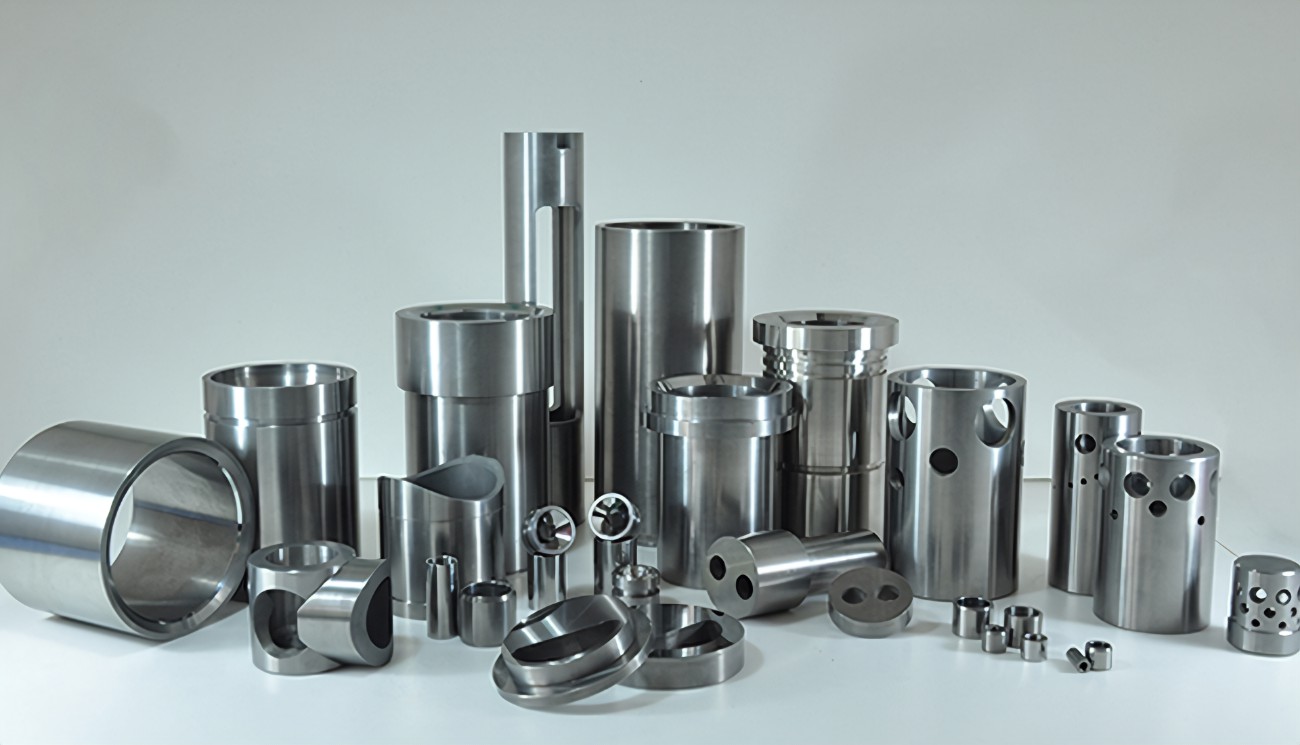
Composition of Cemented Carbide
Cemented carbide is composed of two main components:
1. Tungsten Carbide (WC)
Tungsten carbide is a hard, ceramic material that provides the primary hardness and wear resistance. It is the main component, typically making up 70-90% of the material.
2. Metallic Binder (Cobalt)
Cobalt is the most common binder used in cemented carbide, although nickel (Ni) and iron (Fe) can also be used. The binder holds the tungsten carbide particles together, providing toughness and ductility to the composite material.
Manufacturing Process
The production of cemented carbide involves several key steps:
1. Powder Preparation
Tungsten carbide powder and cobalt powder are mixed in precise proportions. The mixture is then milled to achieve a uniform particle size distribution.
2. Compaction
The mixed powder is pressed into the desired shape using hydraulic or mechanical presses. This step forms a "green" compact that is still fragile and porous.
3. Sintering
The green compact is heated in a controlled atmosphere (usually hydrogen or vacuum) at high temperatures (around 1400-1600°C). During sintering, the cobalt binder melts and flows, bonding the tungsten carbide particles together and densifying the material.
4. Finishing
After sintering, the cemented carbide parts may undergo additional processes such as grinding, polishing, or coating to achieve the final dimensions and surface finish.
Properties of Cemented Carbide
Cemented carbide exhibits a unique combination of properties that make it suitable for demanding applications:
1. High Hardness
Cemented carbide is one of the hardest materials available, second only to diamond. This makes it highly resistant to wear and abrasion.
2. Excellent Wear Resistance
The material's hardness and toughness make it ideal for applications involving high levels of friction and wear.
3. High Strength and Toughness
Despite its hardness, cemented carbide has good toughness, allowing it to withstand impact and shock loads.
4. Thermal Stability
Cemented carbide retains its properties at high temperatures, making it suitable for high-speed cutting and machining operations.
5. Corrosion Resistance
While not inherently corrosion-resistant, cemented carbide can be coated or treated to enhance its resistance to corrosive environments.
Applications of Cemented Carbide
Cemented carbide is used in a wide range of industrial applications due to its exceptional properties:
1. Cutting Tools
Cemented carbide is widely used in the manufacture of cutting tools such as drills, end mills, inserts, and saw blades. Its hardness and wear resistance make it ideal for machining metals, composites, and other hard materials.
2. Wear Parts
Components subject to high wear, such as dies, punches, and nozzles, are often made from cemented carbide to extend their service life.
3. Mining and Construction
Cemented carbide is used in mining tools like drill bits, road planer teeth, and rock crushers, where its toughness and wear resistance are critical.
4. Industrial Machinery
In industrial machinery, cemented carbide is used for wear-resistant parts such as seals, bearings, and valve components.
5. Electronics
Cemented carbide is used in the production of wire drawing dies, which require high precision and durability.
6. Medical Devices
In the medical field, cemented carbide is used for surgical instruments and dental tools due to its hardness and biocompatibility.
Advantages of Cemented Carbide
- Exceptional Hardness: Provides superior wear resistance and durability.
- High Strength: Capable of withstanding heavy loads and impacts.
- Thermal Stability: Maintains performance at high temperatures.
- Versatility: Suitable for a wide range of industrial applications.
Challenges of Cemented Carbide
- Brittleness: While tough, cemented carbide can be brittle and prone to chipping or cracking under certain conditions.
- Cost: The raw materials and manufacturing process make cemented carbide more expensive than some alternatives.
- Machining Difficulty: Due to its hardness, cemented carbide is challenging to machine and requires specialized tools and techniques.
Conclusion
Cemented carbide is a remarkable material that combines the hardness of tungsten carbide with the toughness of a metallic binder, typically cobalt. Its unique properties make it indispensable in industries requiring high wear resistance, strength, and thermal stability. From cutting tools and wear parts to mining and medical devices, cemented carbide plays a crucial role in enhancing performance and durability. Despite its challenges, the benefits of cemented carbide make it a preferred choice for demanding applications across various sectors.
Dongguan Sanlixin Plastic Technology Co.,Ltd
Shenzhen Sanlixin Technology Co., Ltd. and Dongguan Sanlixin Plastic Technology Co., Ltd. is a manufacturer integrating precision plastic mold design, mold opening, single (double) color injection molding, IML injection molding processing, producing various single (double) color, IML process high-end appearance decorative structural parts, two-color buttons, USB dust plugs, panels and other plastic products, providing customers with fast, excellent, Midea all-round service, the company has 15 years of experience in precision plastic mold design, processing and production, with a variety of advanced machine injection molding equipment with excellent quality and fast service to win the trust and strong support of our customers.
EDM: How to Choose Electrode Material?
Metric Screws vs. Imperial Screws: Differences and Applications