Cavity Number: The Definitive Guide to Mold Efficiency, Applications & Comparisons
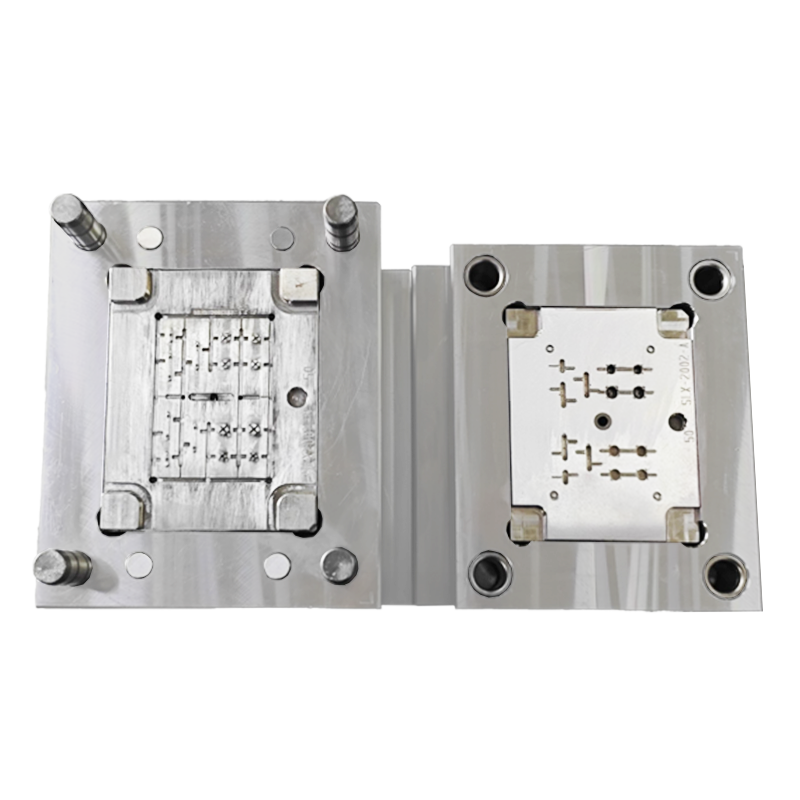
The cavity number of a mold refers to how many identical product cavities it has, a key factor that directly influences the efficiency and output of injection molding processes.
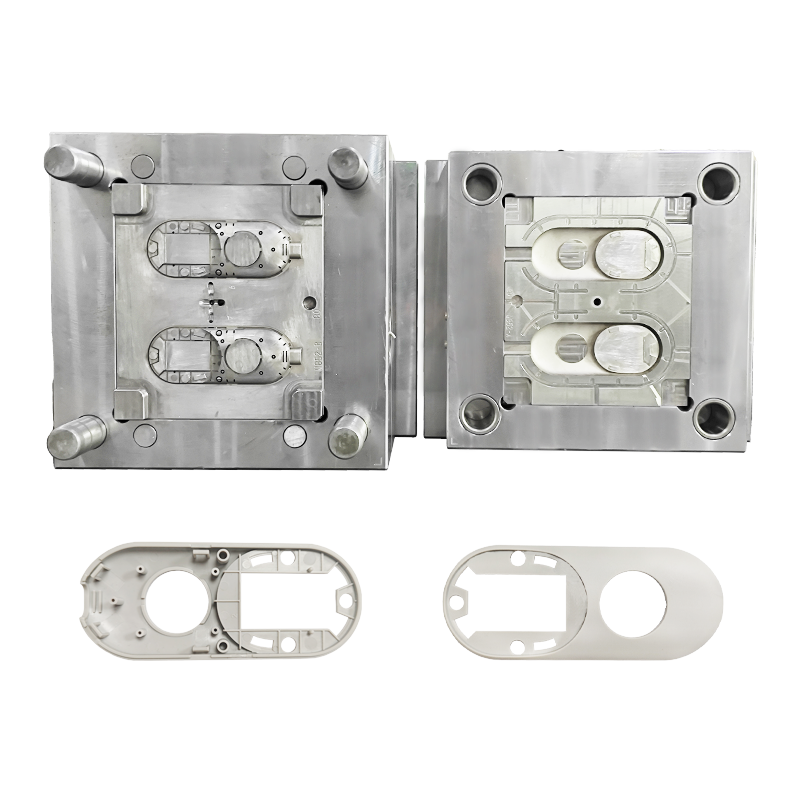
Table of Contents
- What Is Cavity Number?
- Core Functions of Cavity Number in Manufacturing
- Key Applications of Cavity Number Across Industries
- Cavity Number: Comparisons & Pros/Cons
- How to Choose the Right Cavity Number?
- Conclusion
H2: What Is Cavity Number?
H2: Core Functions of Cavity Number in Manufacturing
H3: 1. Production Efficiency Optimization
H3: 2. Unit Cost Reduction
H3: 3. Quality Consistency Control
H2: Key Applications of Cavity Number Across Industries
H3: H3: Medical Manufacturing
- Cavity Number Range: 4–96 cavities (high-volume, precision-focused)
- Use Case: 96-cavity molds for insulin pen protective caps, leveraging high cavity counts for mass production while maintaining cleanroom compatibility . 4-cavity LSR (liquid silicone rubber) molds for custom medical components, balancing efficiency with strict quality control .
- Why It Matters: Cavity number ensures consistent part dimensions for sterile, regulatory-compliant products.
H3: Automotive Industry
- Cavity Number Range: 1–8 cavities (large, complex parts)
- Use Case: 1-cavity molds for car door panels (895mmx770mmx105mm) due to size and structural complexity . 4–8 cavity molds for small interior components (e.g., buttons, seals) to meet high production volumes .
- Why It Matters: Single-cavity molds avoid filling issues in large parts, while multi-cavity designs reduce costs for high-demand components.
H3: Packaging Sector
- Cavity Number Range: 24–64+ cavities (high-volume, small parts)
- Use Case: 48-cavity molds for tethered water caps, achieving cycle times under 3 seconds . 64-cavity molds for food containers, supporting million-unit production runs .
- Why It Matters: Extreme cavity counts drive down unit costs for disposable packaging, a key competitive factor in the industry.
H3: Electronics Manufacturing
- Cavity Number Range: 2–16 cavities (precision, medium-volume)
- Use Case: 2–4 cavity molds for electronic connectors, prioritizing dimensional accuracy . 8–16 cavity molds for plastic phone components, balancing efficiency with tight tolerances .
- Why It Matters: Moderate cavity numbers ensure consistent performance for parts that require precise fits.
H2: Cavity Number: Comparisons & Pros/Cons
H3: 4.1 Single vs. Multi-Cavity Molds
| Factor | Single-Cavity Molds | Multi-Cavity Molds |
|---|---|---|
| Production Efficiency | Low (1 part per cycle) | High (2–192 parts per cycle) |
| Upfront Cost | Low (simple structure, minimal tooling) | High (complex design, precision machining) |
| Unit Cost | High (fixed costs spread over fewer parts) | Low (ideal for high-volume runs) |
| Quality Consistency | Excellent (no inter-cavity variation) | Good (requires optimized cooling/flow; accuracy drops ~4–5% per additional cavity) |
| Maintenance | Easy (fewer components, lower failure risk) | Complex (needs regular cavity calibration) |
| Best For | Small runs, large/complex parts, high precision | Large runs, small/simple parts, cost-sensitive production |
H3: 4.2 Injection Molds (Cavity Number Focus) vs. Other Manufacturing Processes
H4: Injection Molding vs. 3D Printing
- Cavity Number Edge: Injection molding’s multi-cavity designs outpace 3D printing in volume—48-cavity molds produce hundreds of parts per hour, while 3D printing typically makes 1–5 parts per hour .
- Pros of Injection Molding: Lower unit costs, faster throughput, material versatility (plastics, LSR, composites) .
- Cons of Injection Molding: High upfront mold costs (not feasible for small runs) .
- Pros of 3D Printing: No mold required, ideal for prototypes/custom parts .
- Cons of 3D Printing: Slow, high unit costs for large volumes, limited material options.
H4: Injection Molding vs. Metal Stamping
- Cavity Number Similarity: Both support multi-cavity designs, but injection molding offers greater flexibility for complex geometries .
- Pros of Injection Molding: Handles intricate shapes (e.g., undercuts, textures) with multi-cavity molds .
- Cons of Injection Molding: Less suitable for thick metal parts; slower than stamping for simple metal components.
- Pros of Metal Stamping: Faster for flat/simple metal parts, lower material waste .
- Cons of Metal Stamping: Limited to metal; complex parts require expensive tooling adjustments.
H2: How to Choose the Right Cavity Number?
H3: 1. Production Volume
- High-volume (1M+ parts/year): Choose 24–192 cavities (e.g., packaging, medical disposables) .
- Medium-volume (10k–1M parts/year): Opt for 4–16 cavities (e.g., electronics, automotive components) .
- Low-volume (1k–10k parts/year): Single-cavity or 2-cavity molds (e.g., prototypes, custom parts) .
H3: 2. Product Complexity & Precision
- Complex/high-precision parts (tolerances <0.01mm): Limit to 1–4 cavities to avoid flow/temperature variations .
- Simple/low-precision parts: 8–64 cavities for cost efficiency .
H3: 3. Equipment Capabilities
- Ensure your injection molding machine’s clamp tonnage, shot volume, and 拉杆 space can accommodate the mold (more cavities = larger mold) .
H3: 4. Cost Budget
- Short-term projects: Single-cavity molds (lower upfront cost) .
- Long-term production: Multi-cavity molds (higher ROI over time) .
H2: Conclusion

Dongguan Sanlixin Plastic Technology Co.,Ltd
Shenzhen Sanlixin Technology Co., Ltd. and Dongguan Sanlixin Plastic Technology Co., Ltd. is a manufacturer integrating precision plastic mold design, mold opening, single (double) color injection molding, IML injection molding processing, producing various single (double) color, IML process high-end appearance decorative structural parts, two-color buttons, USB dust plugs, panels and other plastic products, providing customers with fast, excellent, Midea all-round service, the company has 15 years of experience in precision plastic mold design, processing and production, with a variety of advanced machine injection molding equipment with excellent quality and fast service to win the trust and strong support of our customers.
CNC Machining: The Cornerstone of Precision Manufacturing – Advantages, Comparisons & Industry Impact
Injection Molding Simple Mold: The Unsung Hero of Modern Manufacturing – Advantages & Industry Impact